Exhibition featuring works by Ot Boltà, Mariona Cañadas & Pedro Murúa, Anna Roura, Eduard Ruiz
mono, Lisbon, 2025
The exhibition emerges from the SAC International Curatorial Residency Programme, run by Sant Andreu Contemporani in collaboration with Fabra i Coats – Fàbrica de Creació de Barcelona, and dedicated to international curators. The project is further supported by the Institut Ramon Llull and the PICE Programme of Acción Cultural Española.
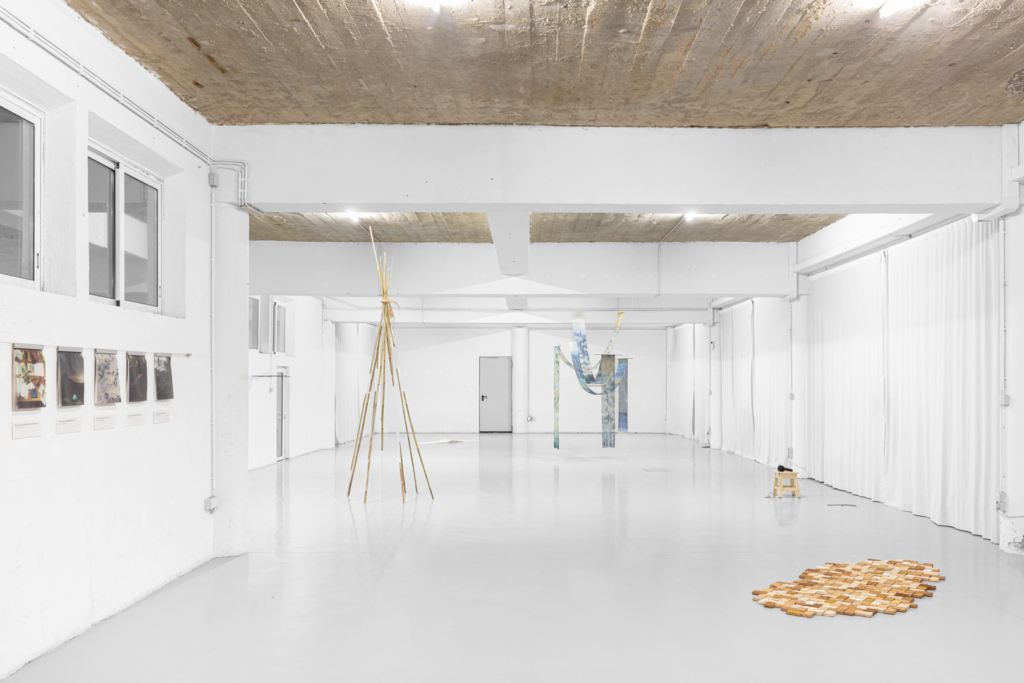
Time is Transparent Here explores how memory, history, and the passage of time manifest in the present, as living matter that reverberates through bodies, landscapes, and objects. History is never truly past but continues to echo in the present, both as a difficult inheritance that marks us and as something precious worth recovering. Time here is layered and porous.
Through practices engaging ecology, archaeology, technology, and craftsmanship, the participating artists examine how traces of the past remain active today. The exhibition invites an expanded temporal sensibility, where human and more-than-human times interlace.
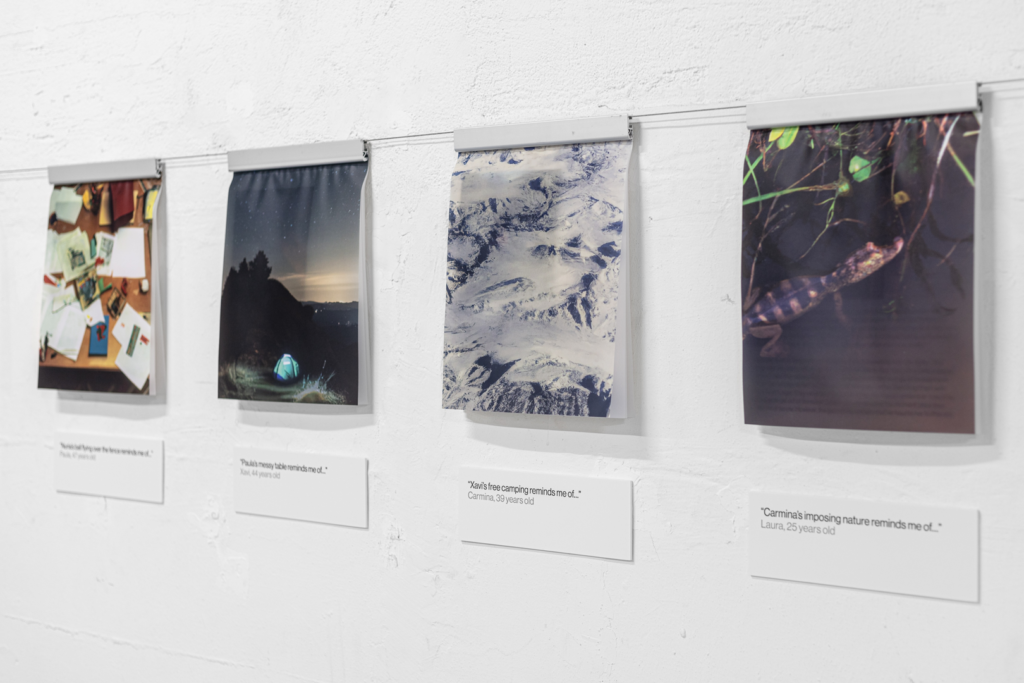
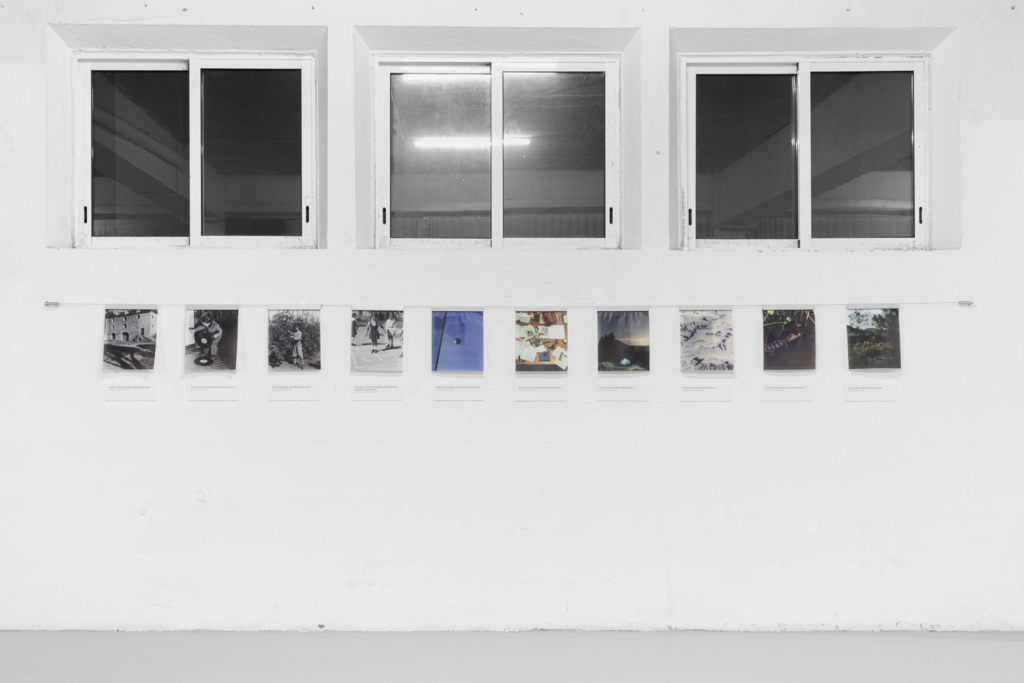
Like a multilayered family album or visual atlas, La reverberació d’un record (The Reverberation of a Memory) invites us to browse not only forwards, left to right, but also through layers of associations that open up behind each image. Anna Roura explores how memory resonates across generations, transforming personal recollection into dreamlike chains of remembrance across ten lifetimes. Her work suggests that the past is never inert but continually reactivated through storytelling and imagination, a thread binding invisible histories to the present. Here, time unfolds as echo and resonance.
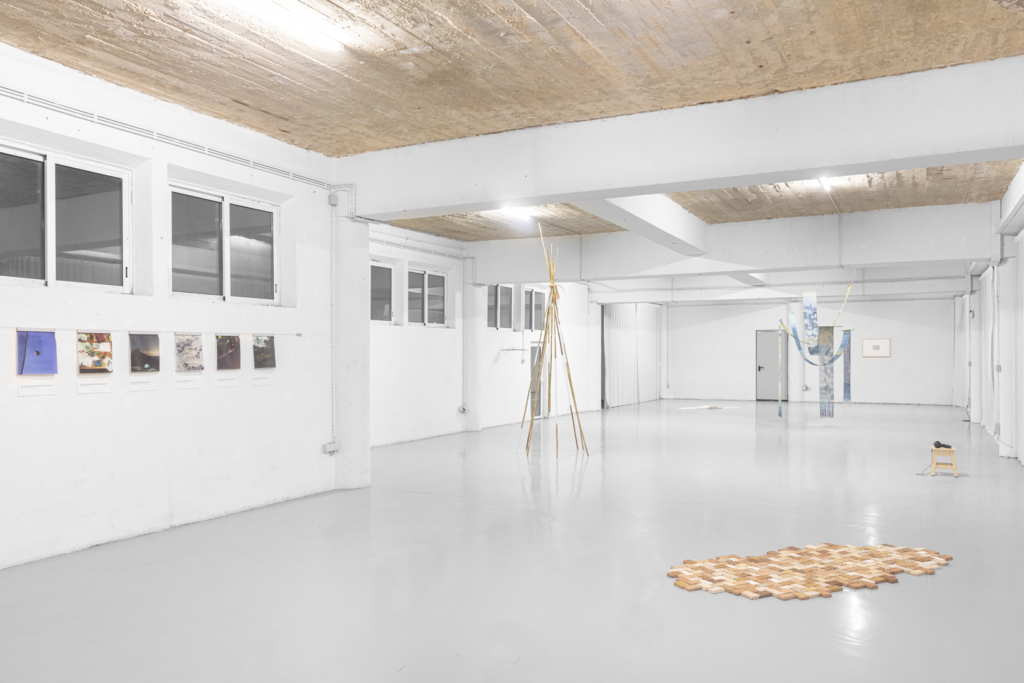
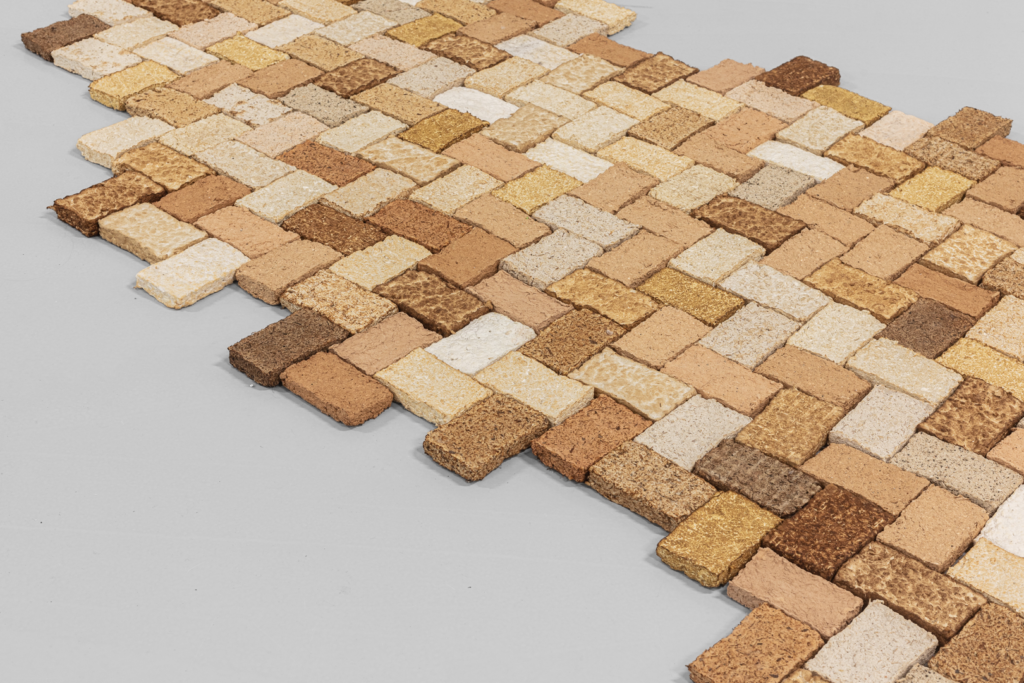
In the work of Mariona Cañadas and Pedro Murúa, time takes the form of sediment: matter that accumulates layer upon layer, where the memory of a place underlies the ground we walk on. The bricks in the artwork Topomezcolanza are made from recycled cellulose infused with plant fibres and soils gathered from the vacant lot beside their studio, where wild plants have grown spontaneously. They evoke the converging temporalities of more-than-human relations within anthropized spaces, tracing how vegetal life resists, adapts, and cooperates in the transformation of ecosystems. The resulting brick structure follows the logic of a woven fabric. Time here accumulates like translucent strata, where the past remains visible in the present.
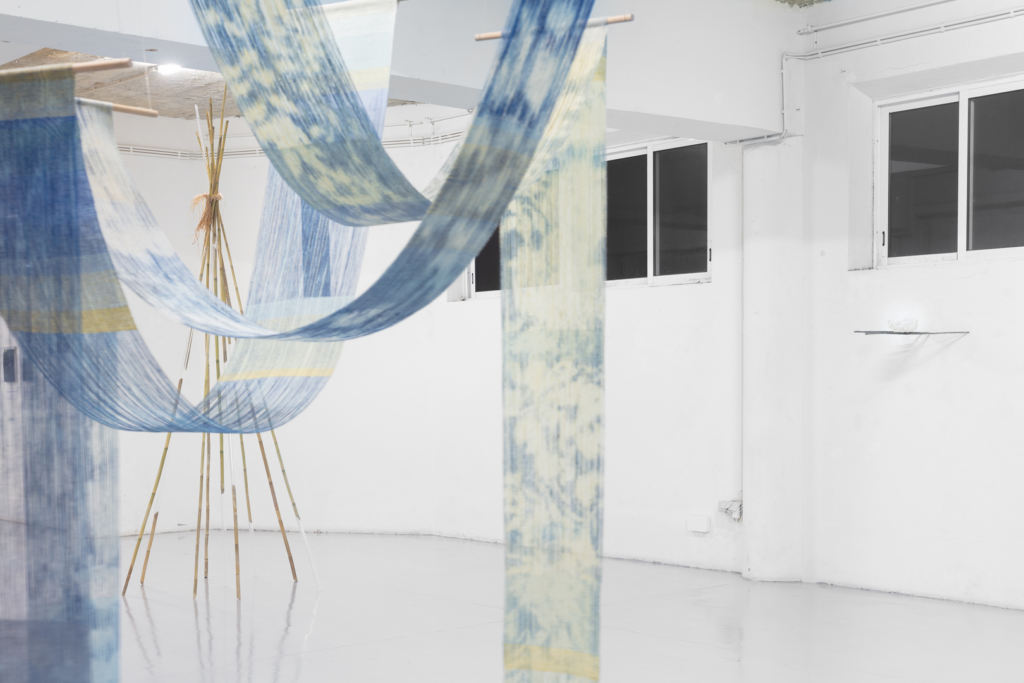
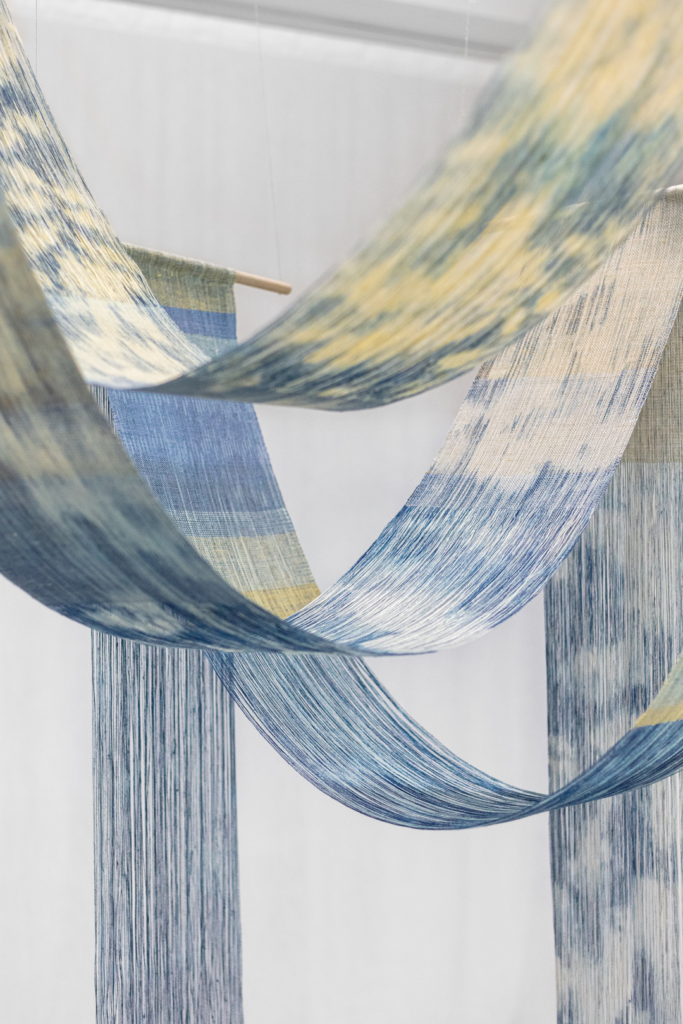
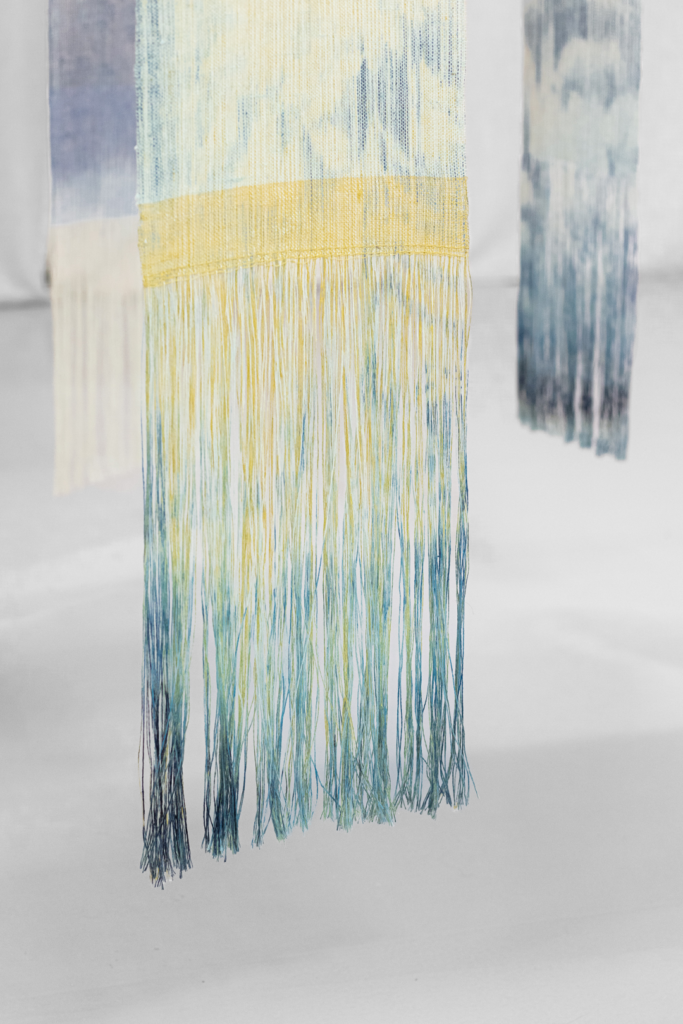
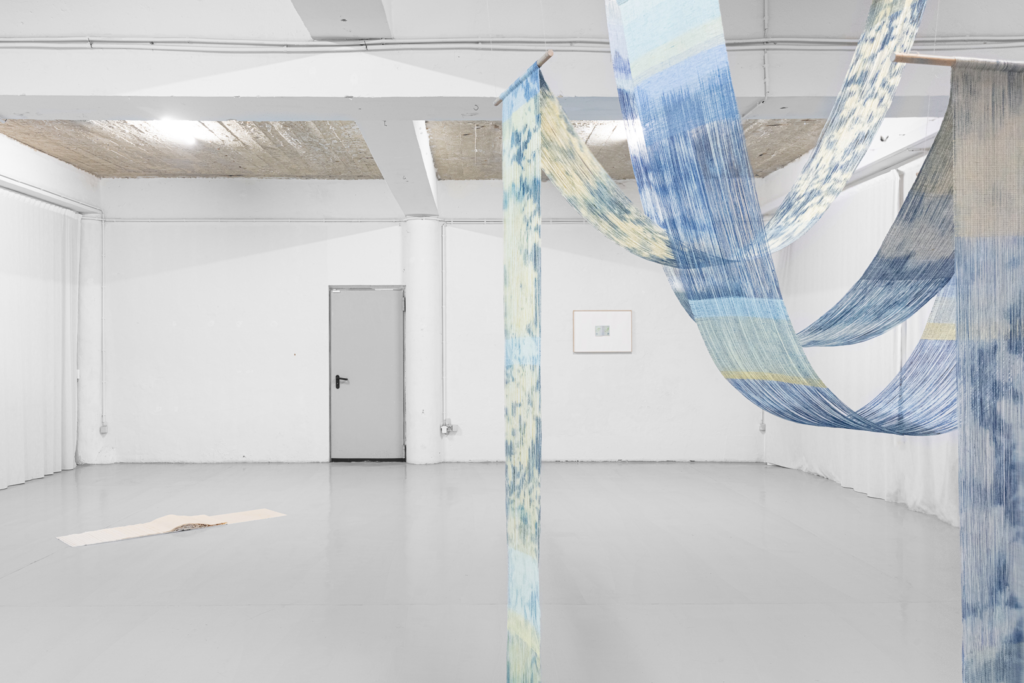
In Desdibuixant el temps (Blurring Time), the duo explores how human, vegetal, solar, and manual temporalities intertwine. What is the time of trees in comparison to that of humans? How does the rhythm of time change through the practice of craft? Three linen warps were dyed with cyanotype and exposed to the shifting light and shadow beneath trees, then partly woven, blurring the outer time of sun and tree with the time of the manual work. Weaving, here, is a practice of attunement to the temporal rhythms of other beings.
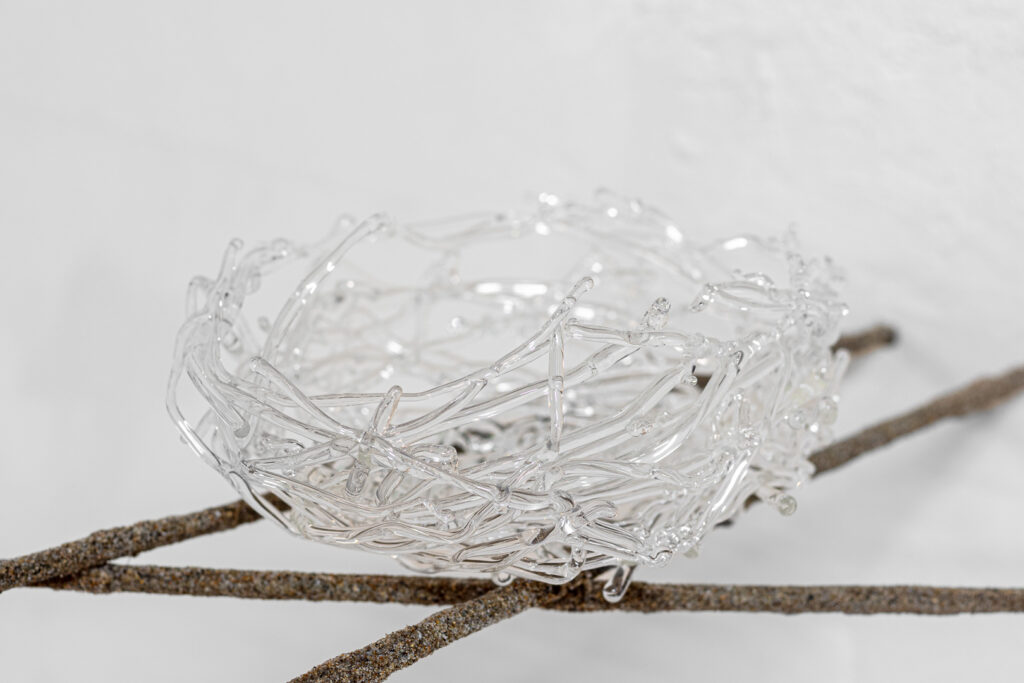
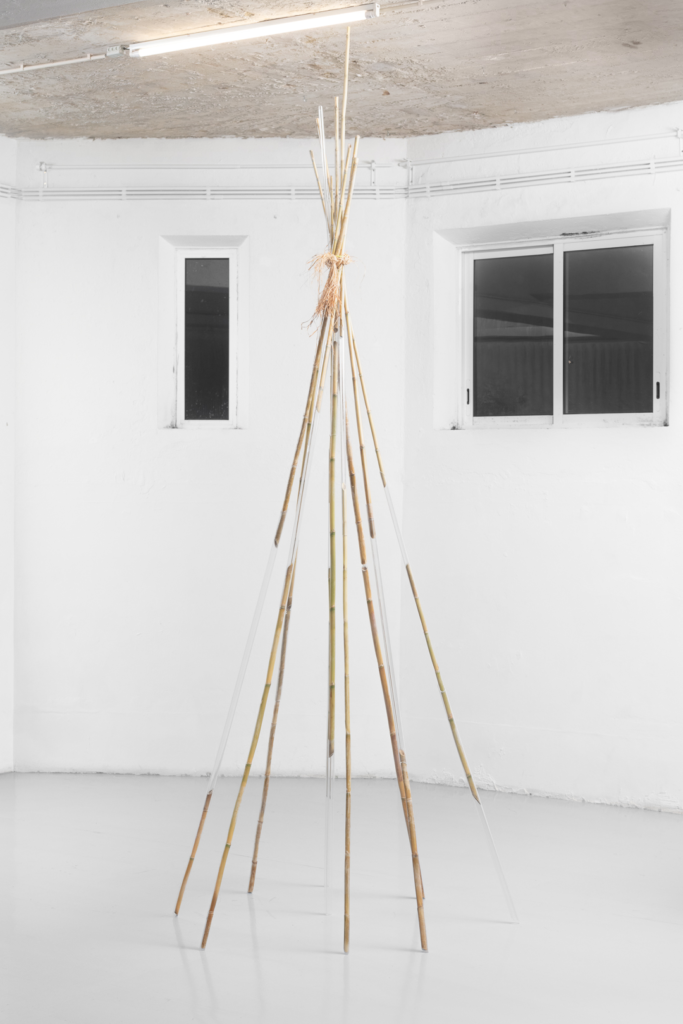
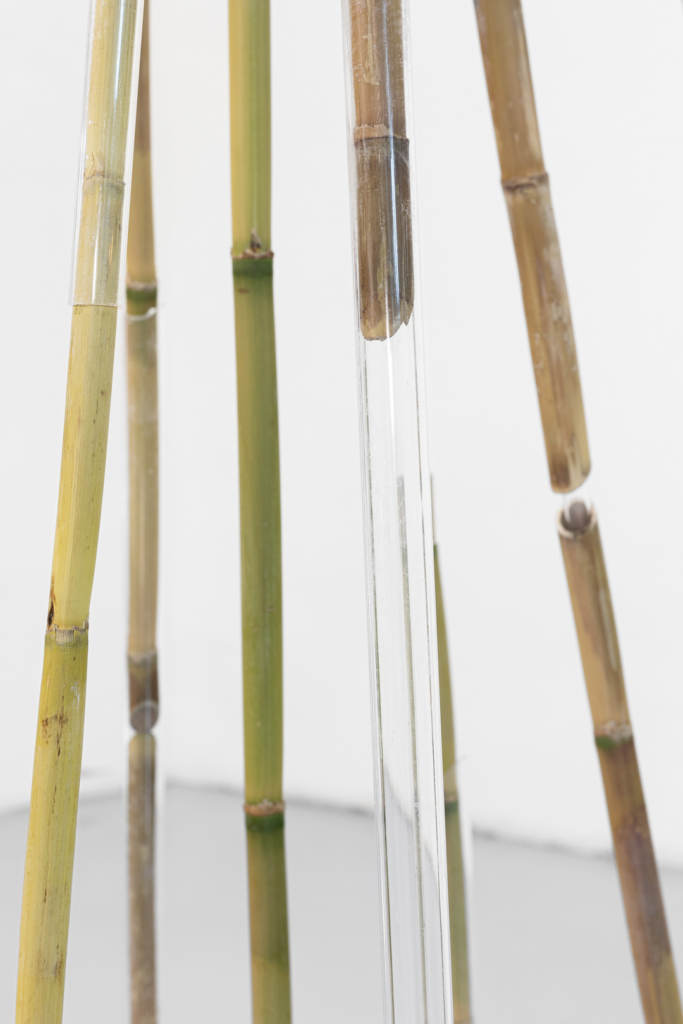
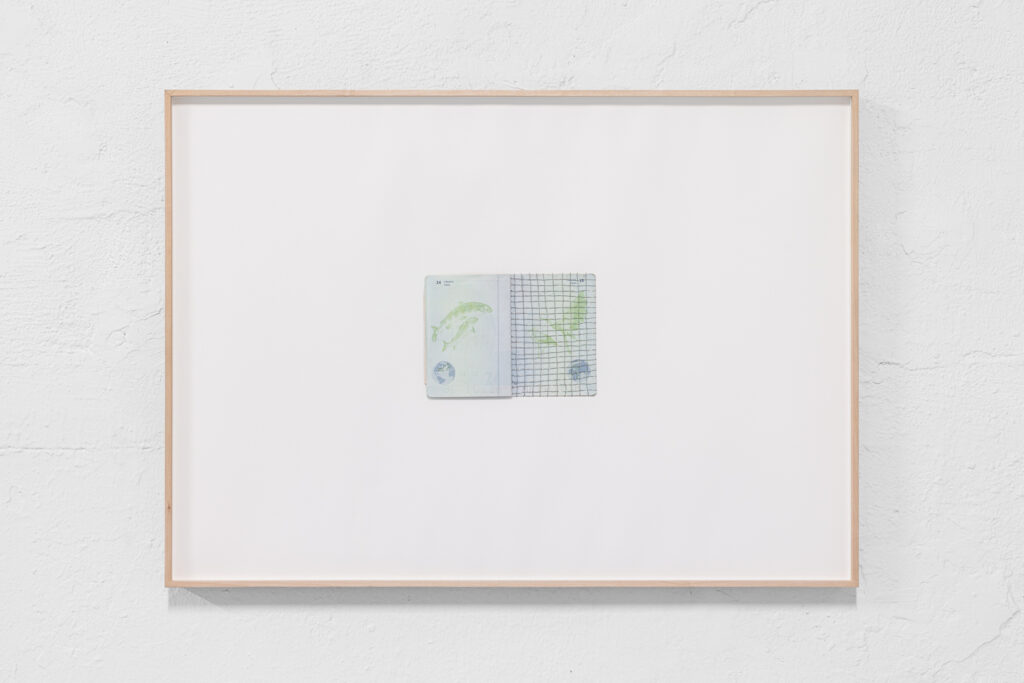
If history is never really past, what happens to what is lost or made to disappear? How do absences continue to make themselves felt over time? Eduard Ruiz explores these tensions in Habitat Extinction and Reed Bed (Arundo donax). Reconstructed bird nests become fragile monuments to vanishing ecosystems – transparent architectures that make absence visible. As the airport’s expansion threatens these habitats, the animals’ compromised migration echoes the politics of human migration. In Passepartout II, fragments of airport fences overlay images of migratory species inside Spanish passports, revealing the entanglement of ecological and political displacement.
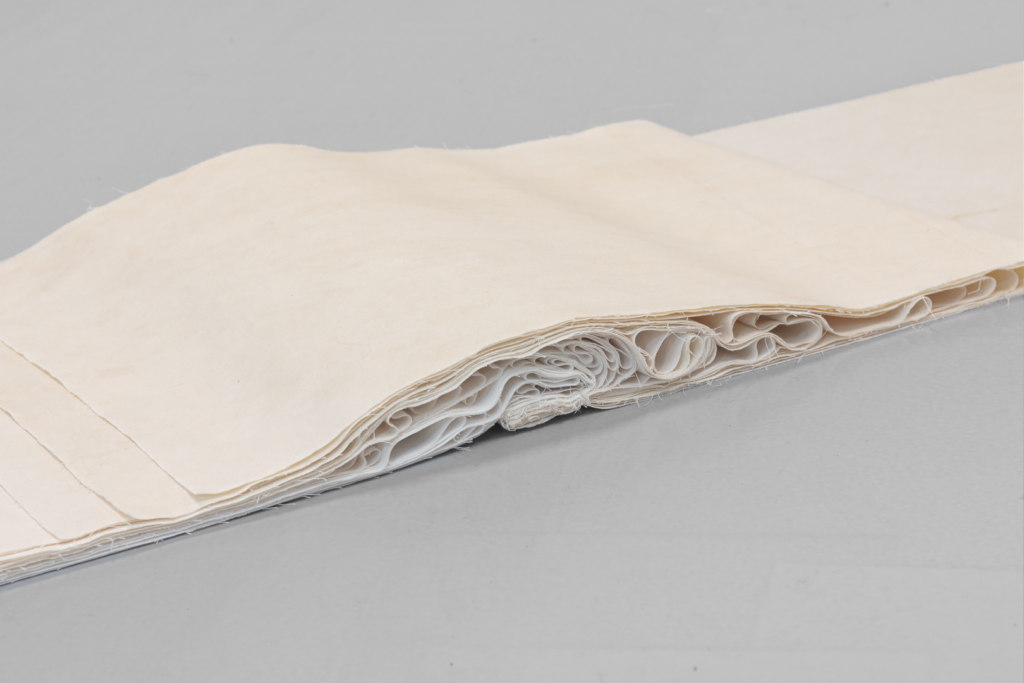
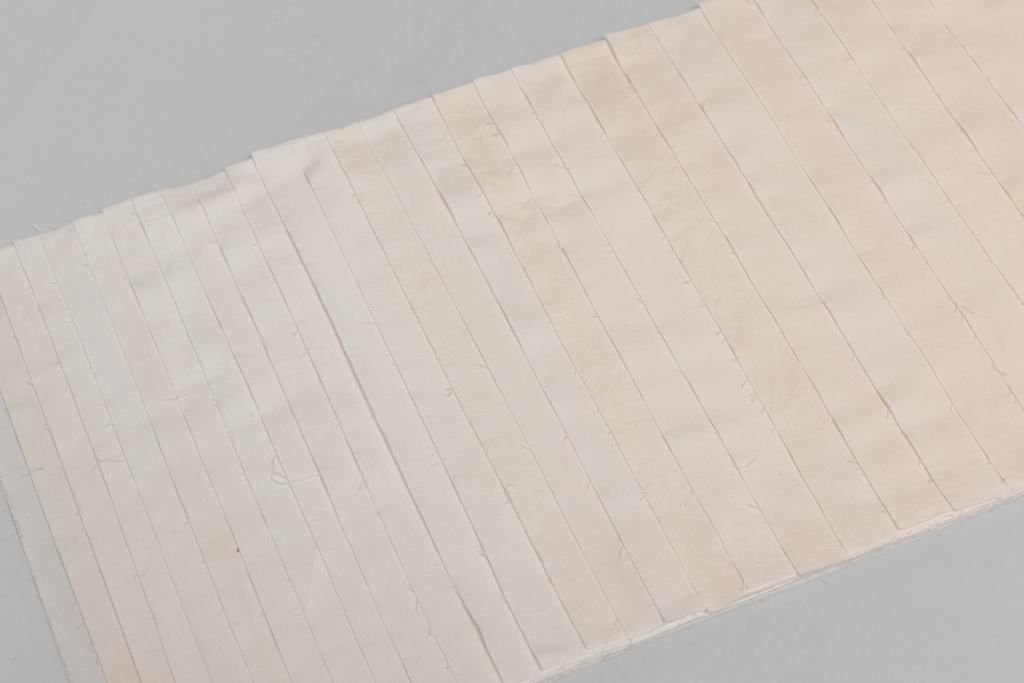
The supposed linearity of time often finds its natural archetype in rivers, a metaphor for time’s forward flow. Yet in Vermellós (Reddish), Ot Boltà unsettles that idea, suggesting that even such linearity is thick and stratified. Tracing the course of the Llobregat river through twenty-eight towns, he submerges pieces of white fabric in its waters. As they absorb pigments, sediments, and histories, these textiles act as tactile registers of place and duration. Accompanied by sound recordings from each site, Vermellós reveals time not as a line, but as a porous and cumulative process. The river, a living archive, is dense with memory.
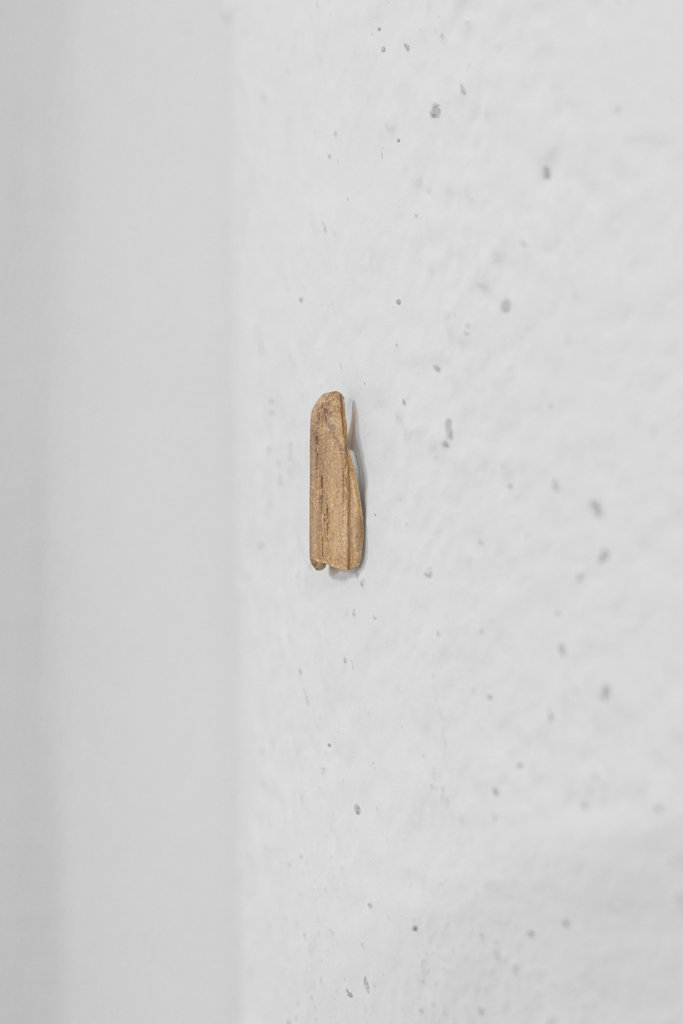
As we tune into these coinciding temporalities, we might encounter the quiet presence of Ot Boltà’s small wooden moths. Still and nearly weightless, they invite a slower gaze: a patient receptiveness to the many presences that inhabit the now.
Photos: Samuel Duarte