Solo exhibition by Hugo Cantegrel
Ostra Practice, Lisbon, 2024
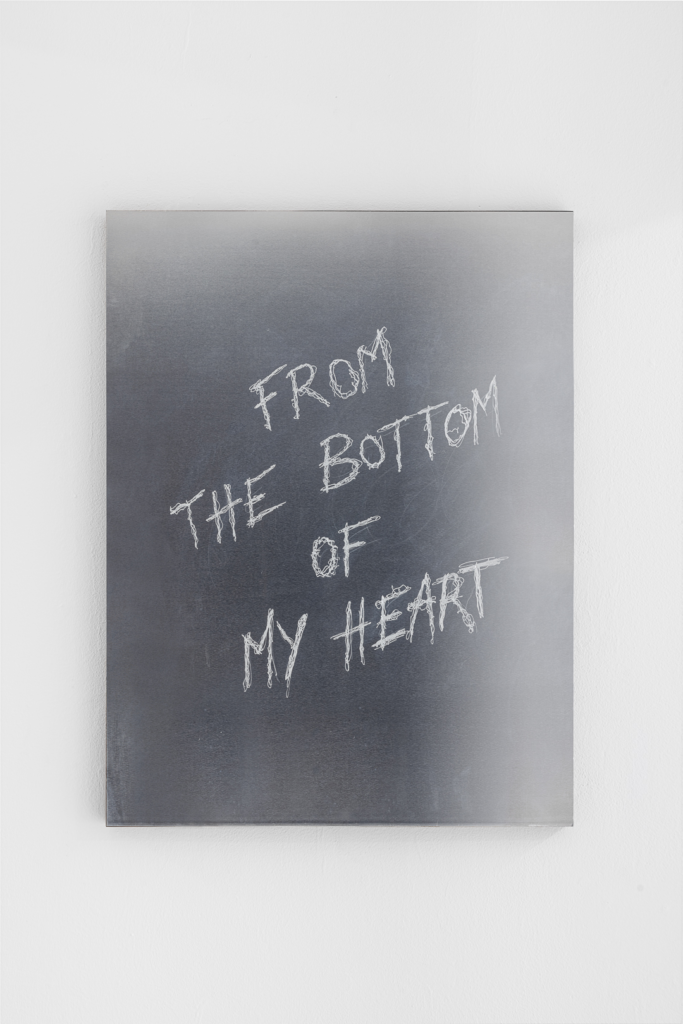
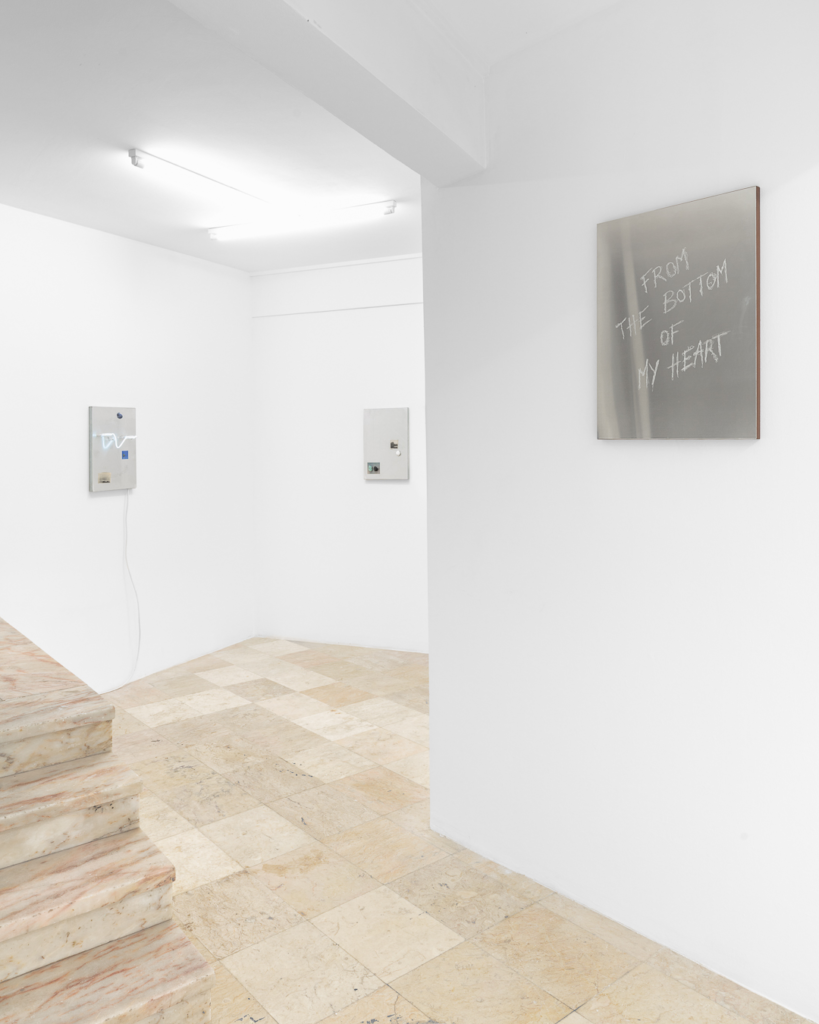
From the Bottom of My Heart is an affirmation of love—words, marks, a message. Not just any message, but one of love. Perhaps unexpected. Do you still believe in love? Where’s the catch? Does love reign in this space?
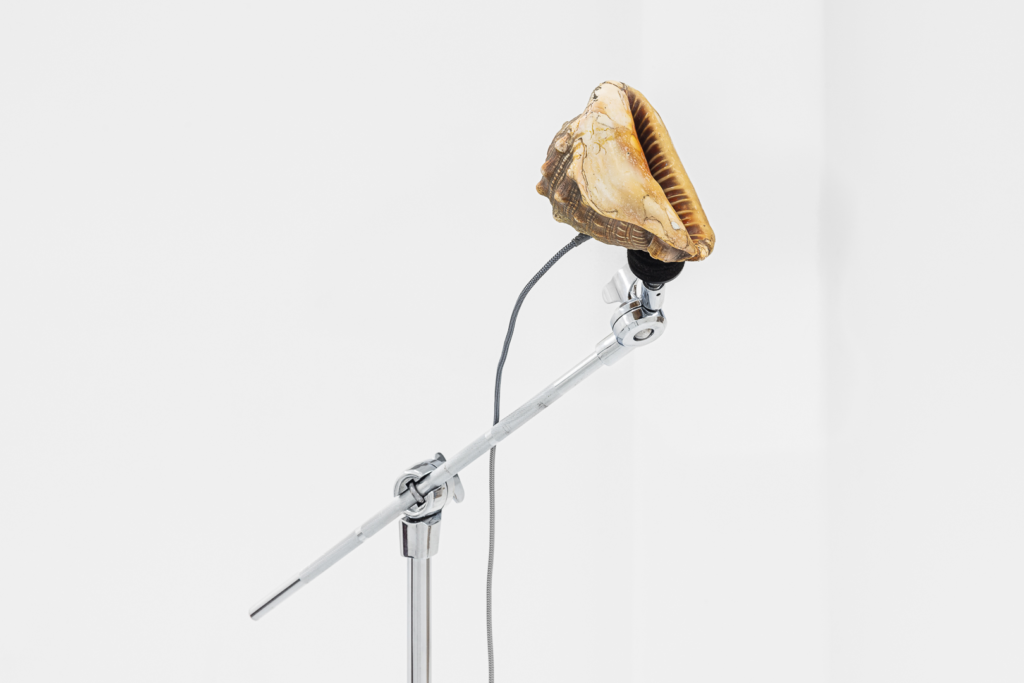
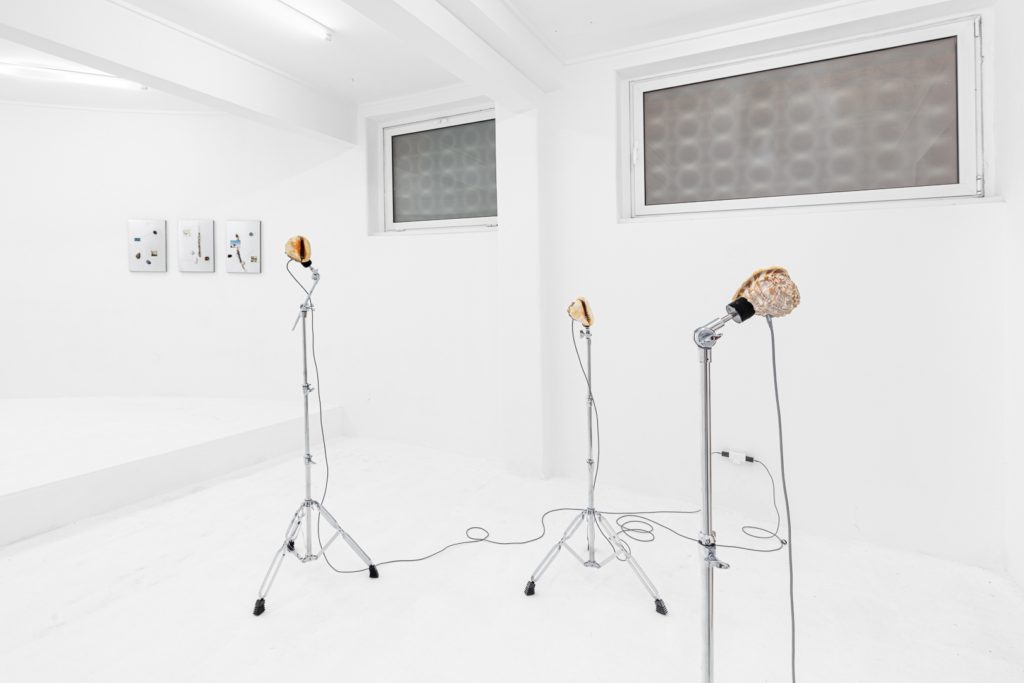
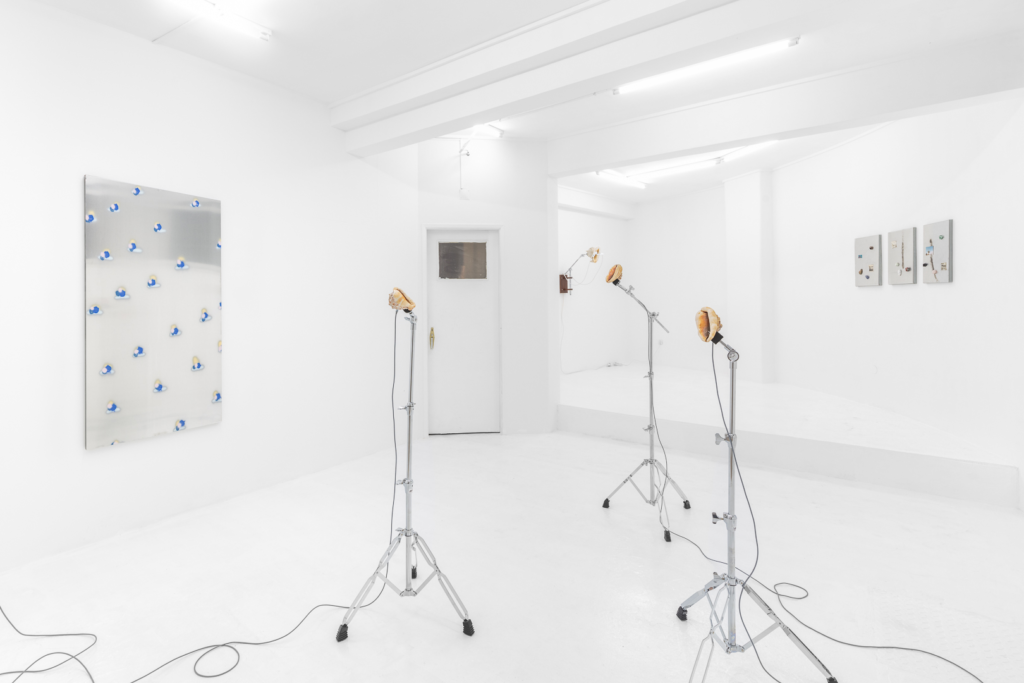
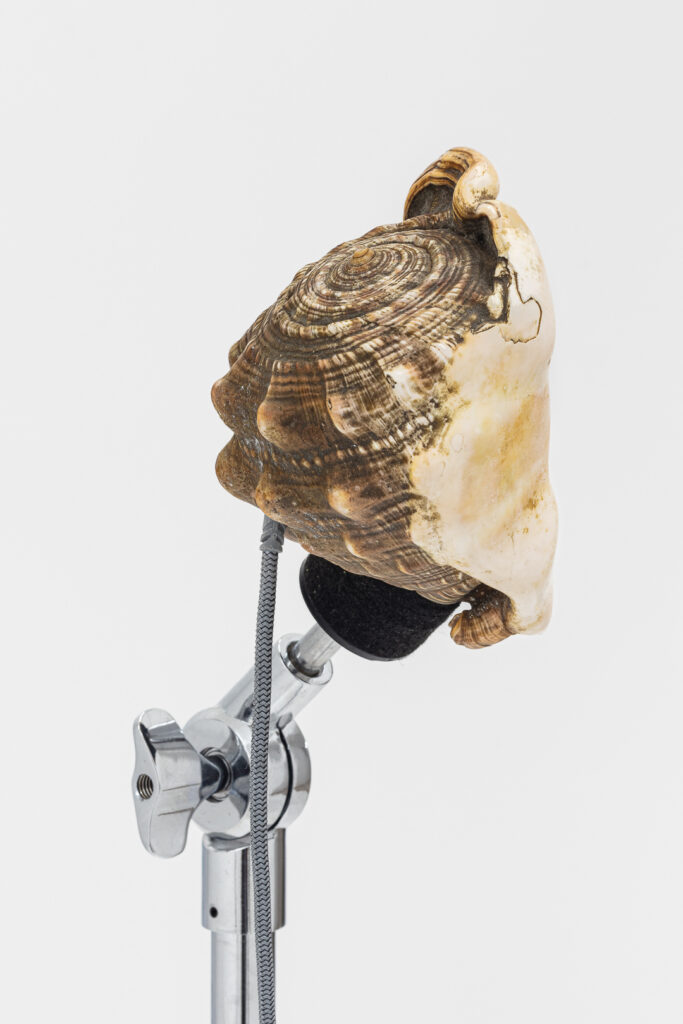
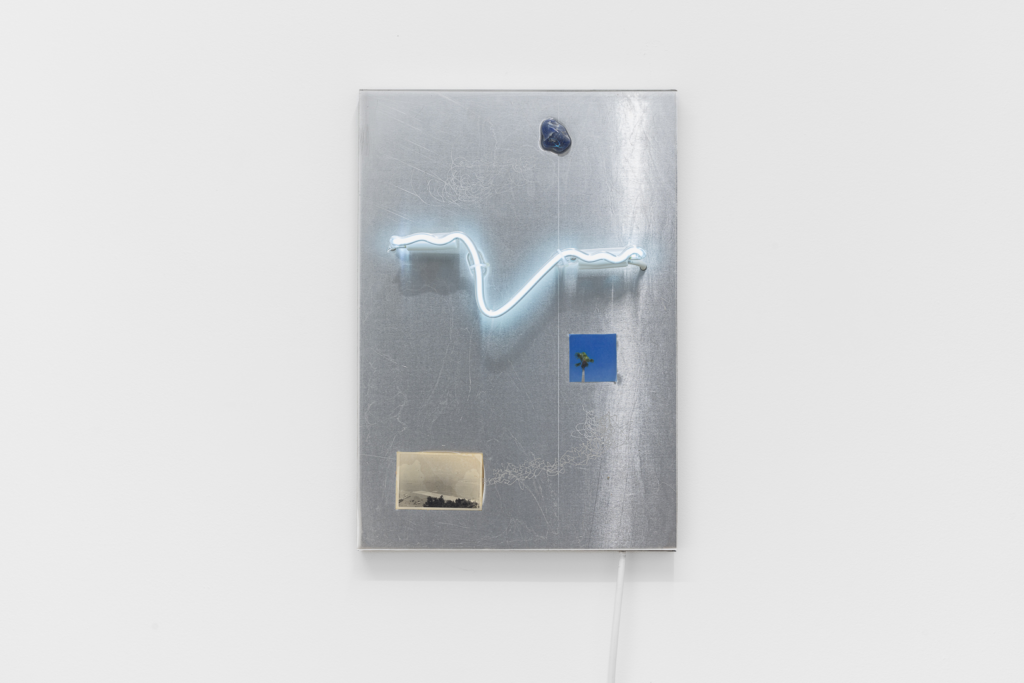
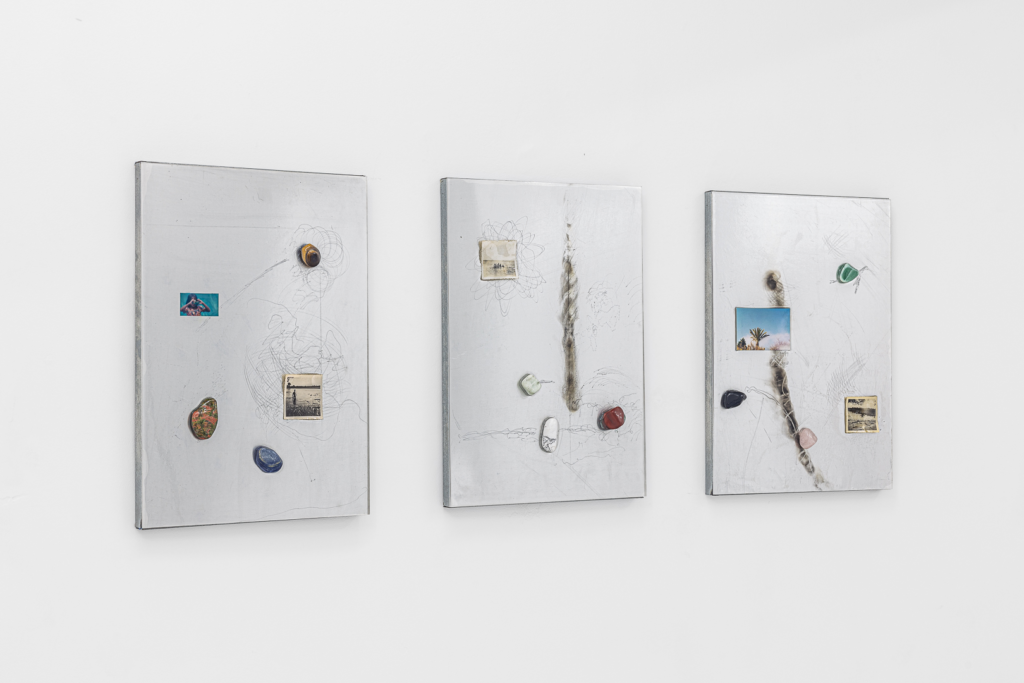
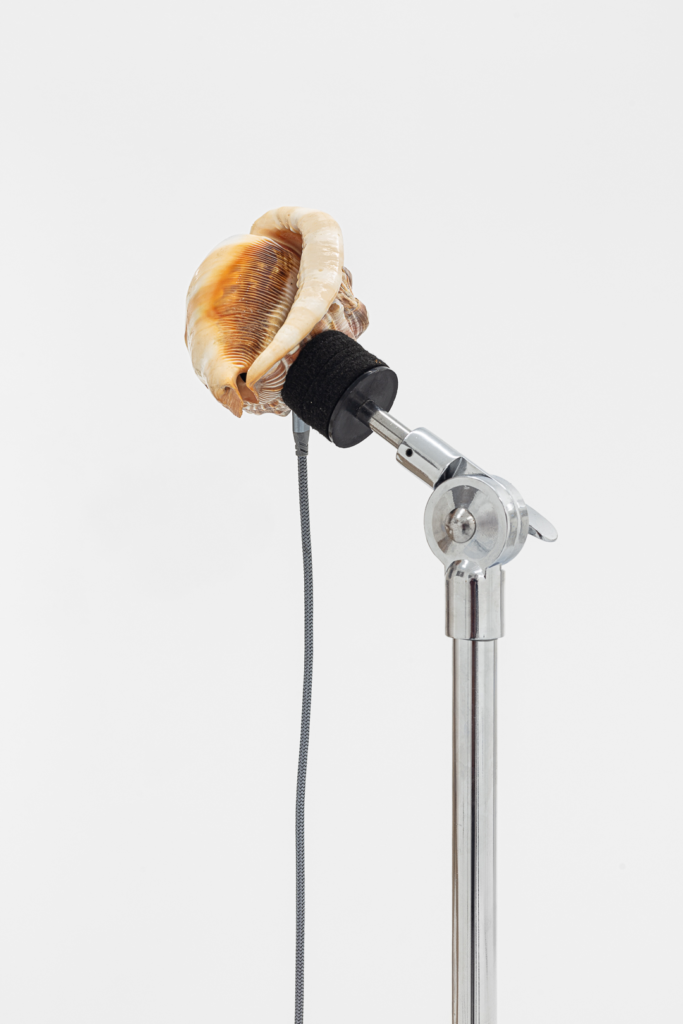
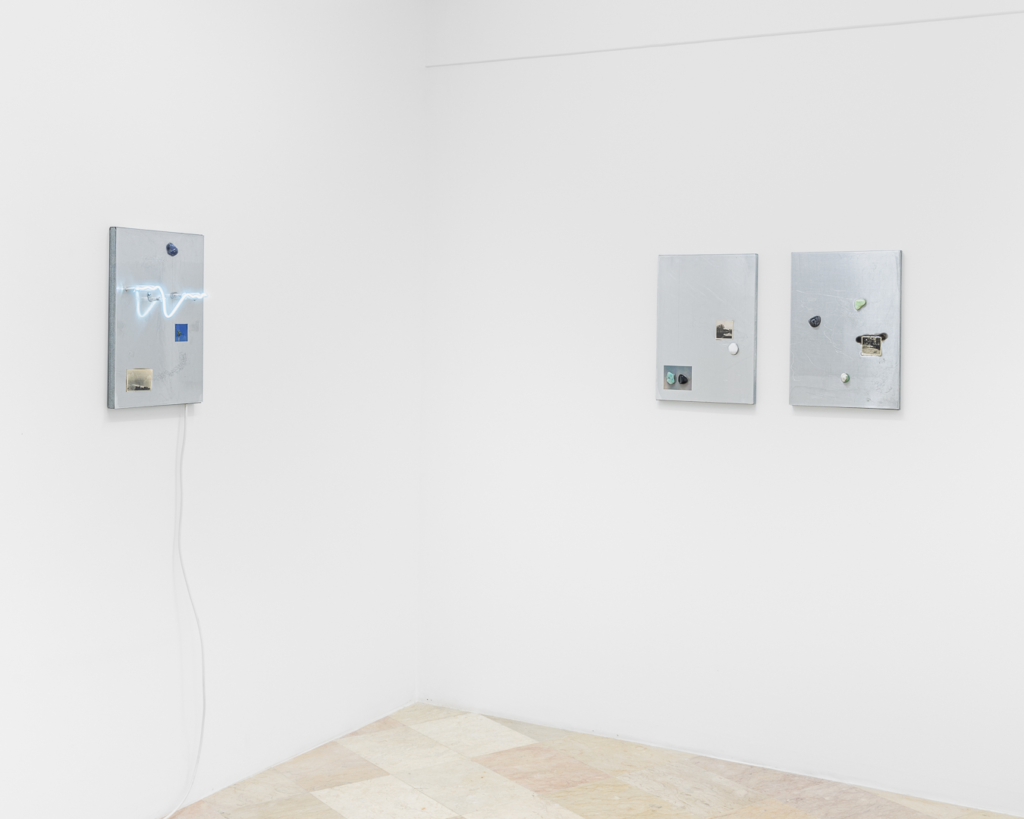
More messages are whispered, like mantras resisting the esoteric—whispered like the echo of waves resounding in shells. Shells like those brought home as souvenirs from family holidays. Family memories, captured in small photographs, are collected for recollection. The artist’s own photos sit alongside tokens of his grandparents’ summers, as well as photos of and by strangers—found, collected, and inserted into playful assemblages. Assemblages of memory imprints, gestures, and small objects like gemstones. Collected, recollected, remembered.
At first glance, the gemstones may seem like tokens from southern beaches, but they carry specific meanings. Assigned various healing powers, their meanings subtly, non-dogmatically, play into the dialogue of these assemblages.
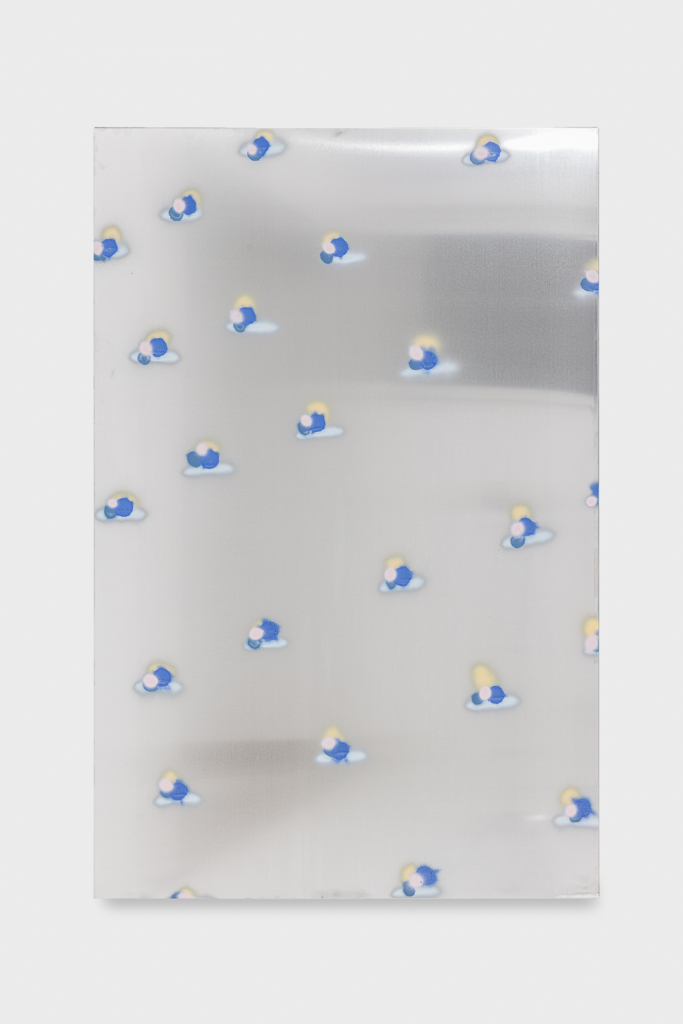
More evocative than narrative, it is a play of colours, a play of forms, a play of evocations, a play of beliefs. And like play, it refuses to offer all its whys or explanations. The material textures, familiar to those following the artist’s oeuvre, embody play more than ever. Without virtual or digital pre-planning, these assemblages are the result of manual-mental-material brainstorming. Conception and realisation happen all at once, directly on and with the material, through the hands.
Among the token-like objects are gestures and traces reminiscent of marks found in public transit spaces, like metro stations—small inserts of human sensitivity (and messiness) into anonymous places. Burn marks and scratches carry a certain violence. In contrast with the soft memories of idyllic summers, they acknowledge the inevitable scars collected over time. Yet these scars are not reasons to give in to cynicism. Some scratches are free strokes, others resemble the traces left by earthworms, still others evoke cursive writing—but their messages are no longer legible. Words are written, written, written, until they disappear, becoming mere gesture. And the gesture says it all. Writing and drawing are one and the same here. What matters is not the words themselves, but the shape of the hand’s movement on the surface. Like a signature, whose shape and curvature say more about its author than letters spelling out a name. The more abstract the gesture, the truer it is. Abstraction filters truth by removing its false forms.
The process is play. And play is the highest form of research. Where many have forgotten the innocence of play, the recollection that comes with collection helps us remember.
A person’s perspective on family memories changes when the one remembering is not only a son and grandson, but has become a father. His own son is now collecting-creating (not yet re-collecting) childhood memories for the first time. These memories don’t have much of a past dimension yet; there is nothing frozen about them. Everything is still open and possible. Perhaps this is what inspires the desire to believe in the world’s beauty, in the hope that these newly created memories might be beautiful. “What else would you rather be?”
From the Bottom of My Heart is an affirmation of love, its innocence perhaps unexpected in a world divided between toxic positivity and disillusioned cynicism. It declares that despite the cynicism to which the state of the world constantly invites us, there is still space for messages of love and care. And there is still space for play. Is it naive and blind to believe so? If someone tells you, “You are someone’s everything,” do you believe them? Where’s the catch? The catch is everywhere, and yet there is still space for play and love. “This is no longer a dream”
Photos: Samuel Duarte