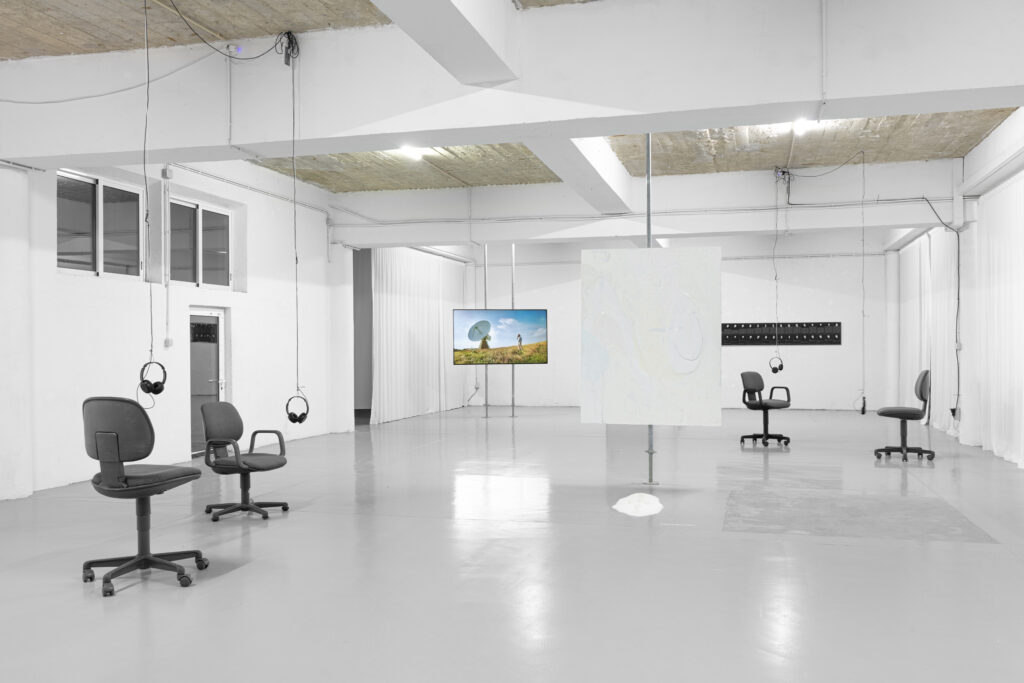
Exhibition featuring works by Yota Ayaan (William Handley), Helena Rosanna Bach, Alice dos Reis, Daniel Godínez Nivón, Solimán López, Joana Patrão
mono, Lisbon, 2024
Who are the Others? What do they have to say, and where do we meet them? The group exhibition Super Natural Voices, with works by Alice dos Reis, Daniel Godínez Nivón, Joana Patrão, Helena Rosanna Bach, Solimán López and Yota Ayaan, is an invitation to listen to those most alien to us: those on the ground and those from outer space.
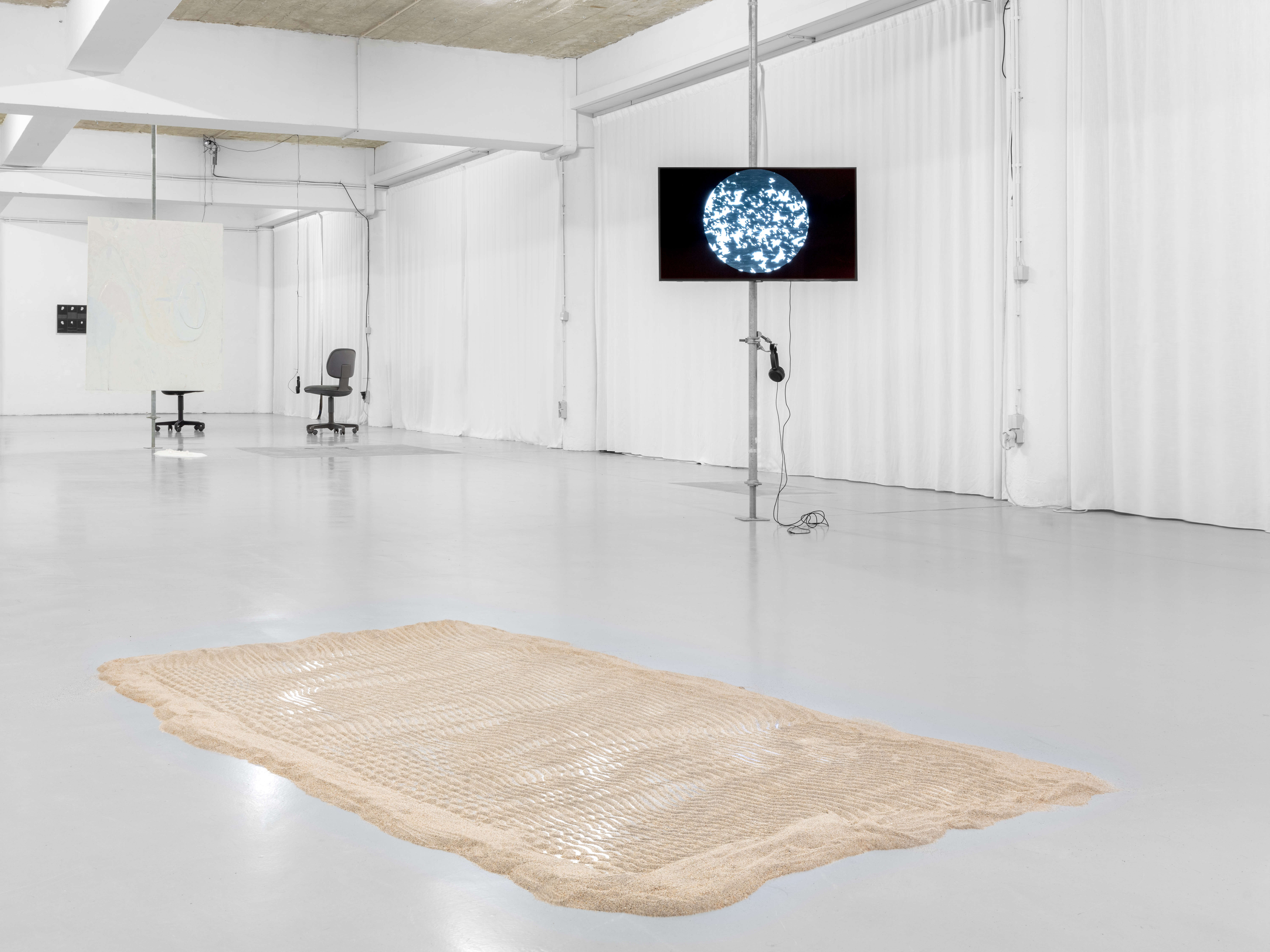
At the beginning were the fossils: beings from other times, solidified in the lioz marble. In Joana Patrão’s work O sopro fóssil [The Fossil Breath] (2022), they become undone, eroded, become sand, the sand of time, of geological time. An echo breathes over the rippled sand and evokes the memory it carries.
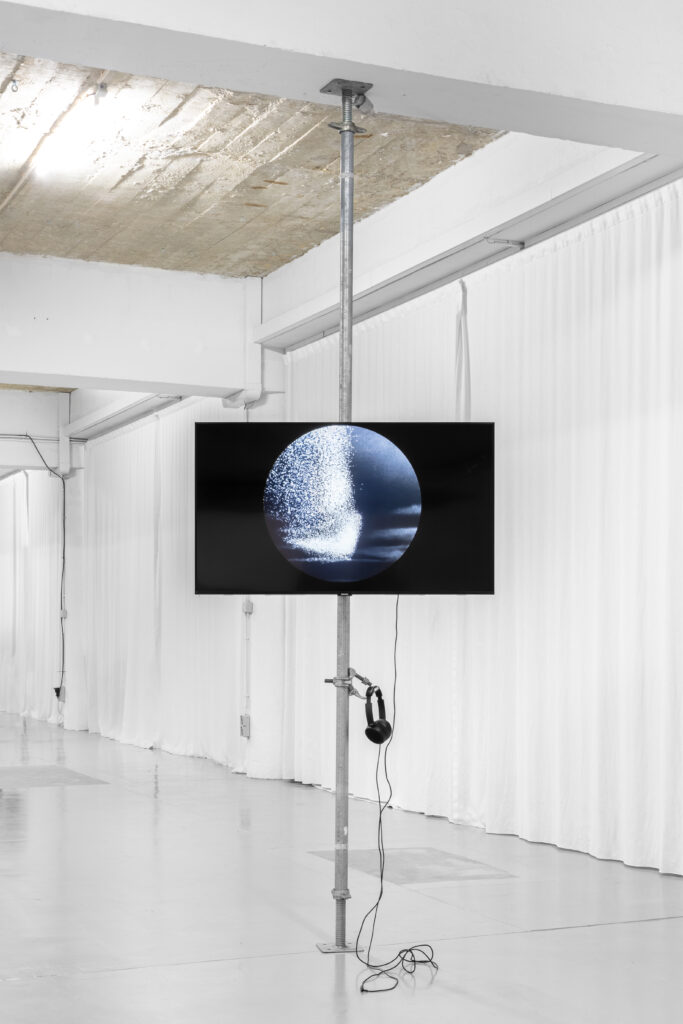
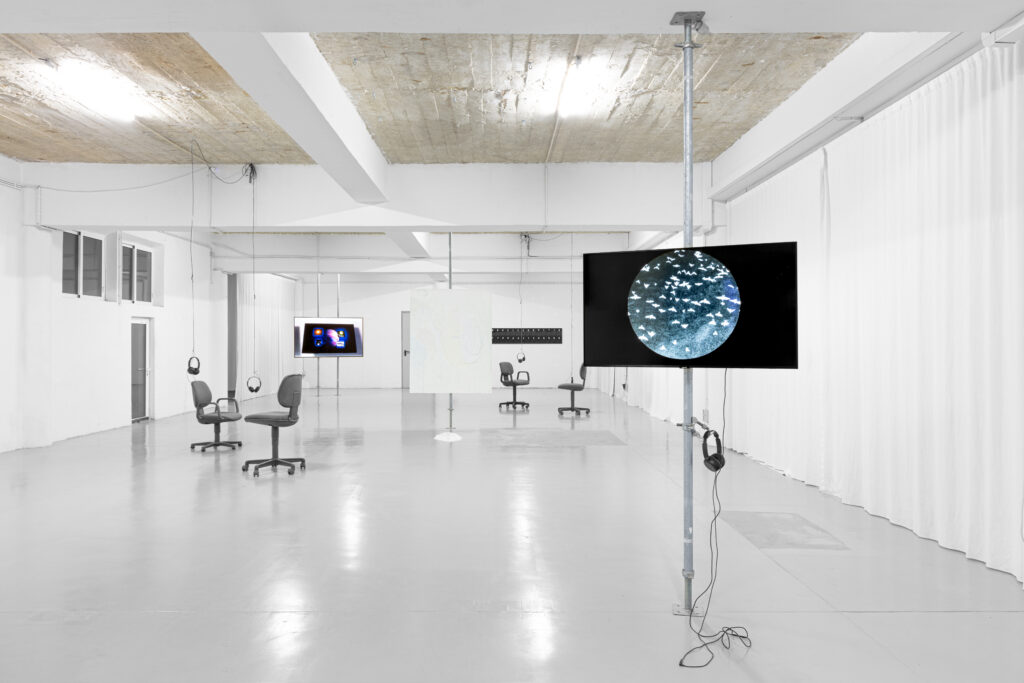
Dreamwind (2022) by Daniel Godínez Nivón is a meditation on the songs of other beings and on collective dreaming. Scientists have found birds that sing in their sleep. What do they sing of at night? And if birds dream, what do they dream of? Might they have nightmares?
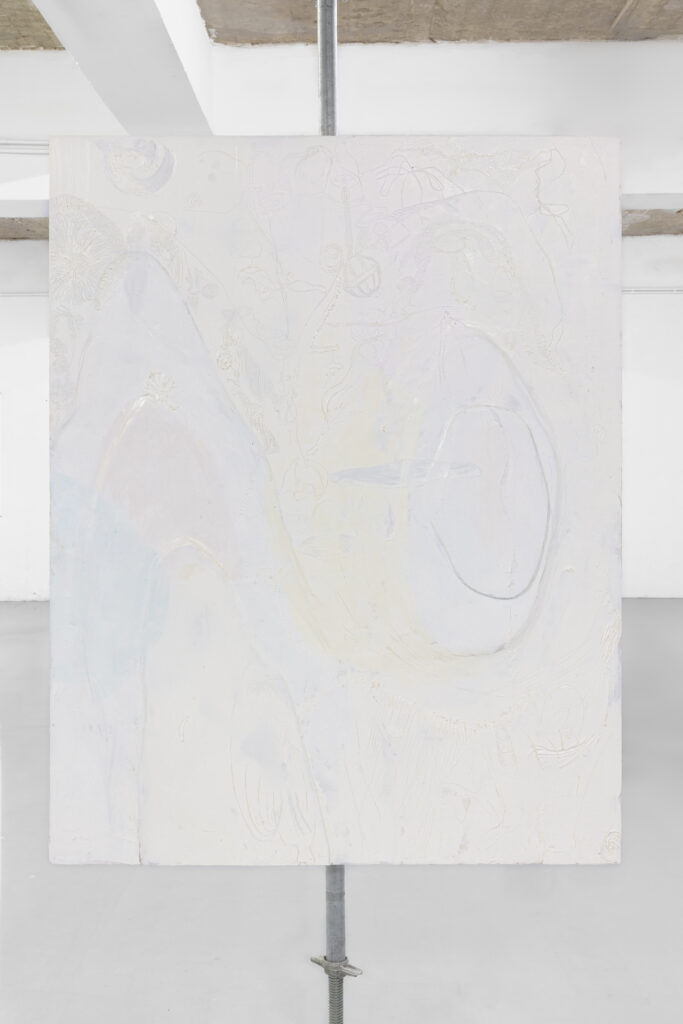
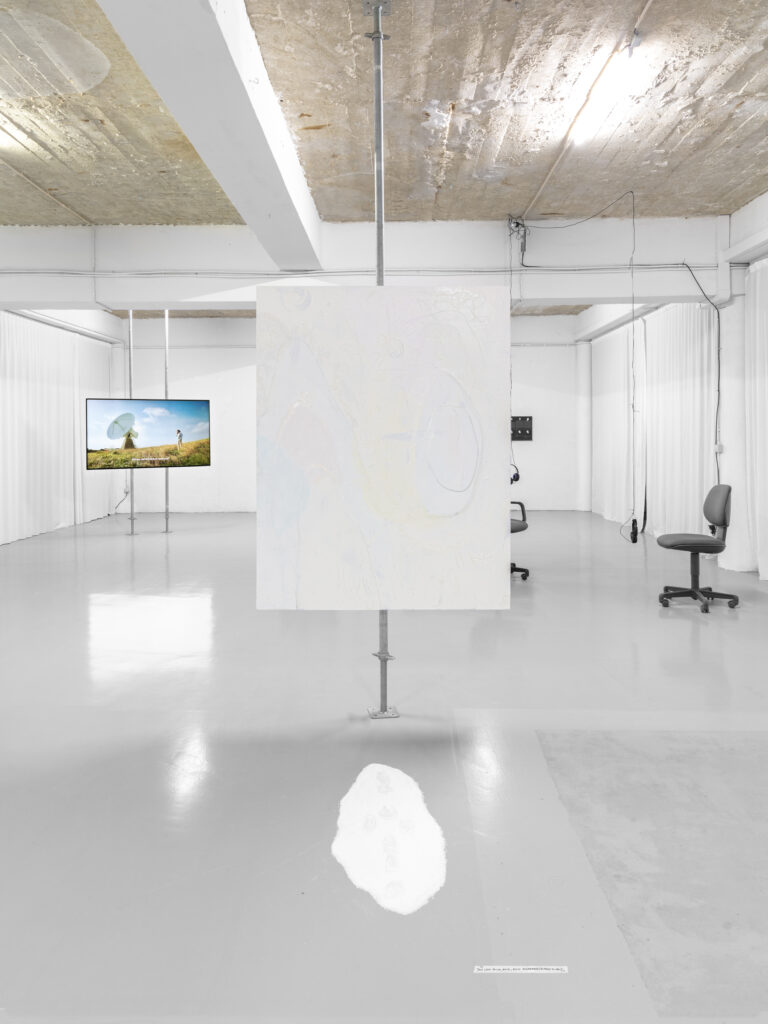
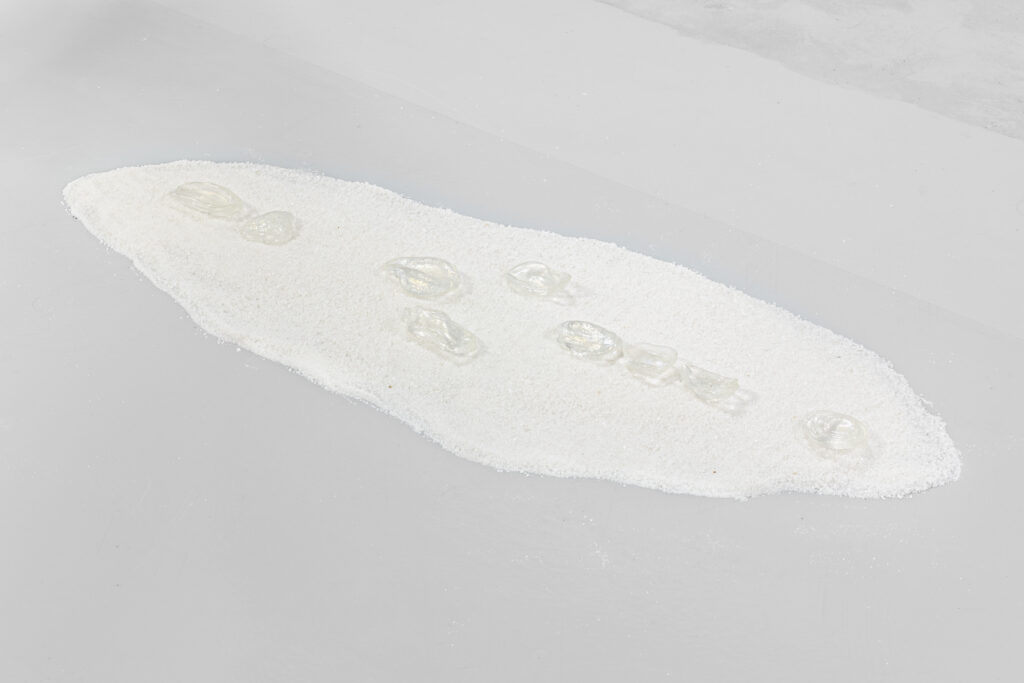
Listening is internal in Helena Rosanna Bach’s Maps of Meaning IV (2024). White, in her painting, is anything but an absence; and silence is charged with presence. On a bed of salt, glass objects, like translucent shells in the sand, invite the visitor to touch, engage, listen.
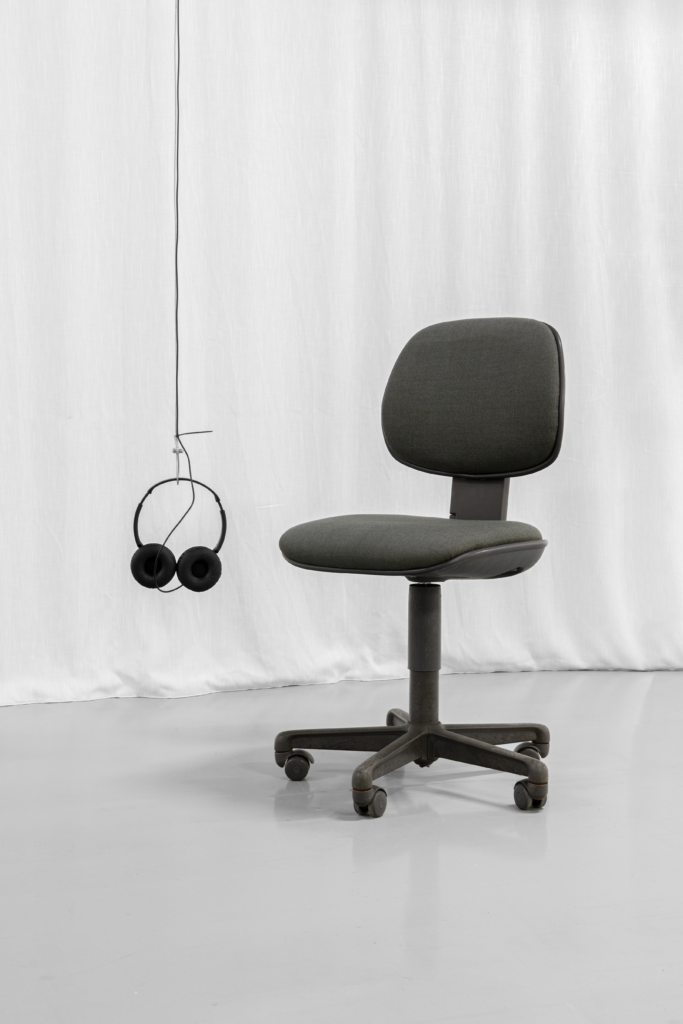
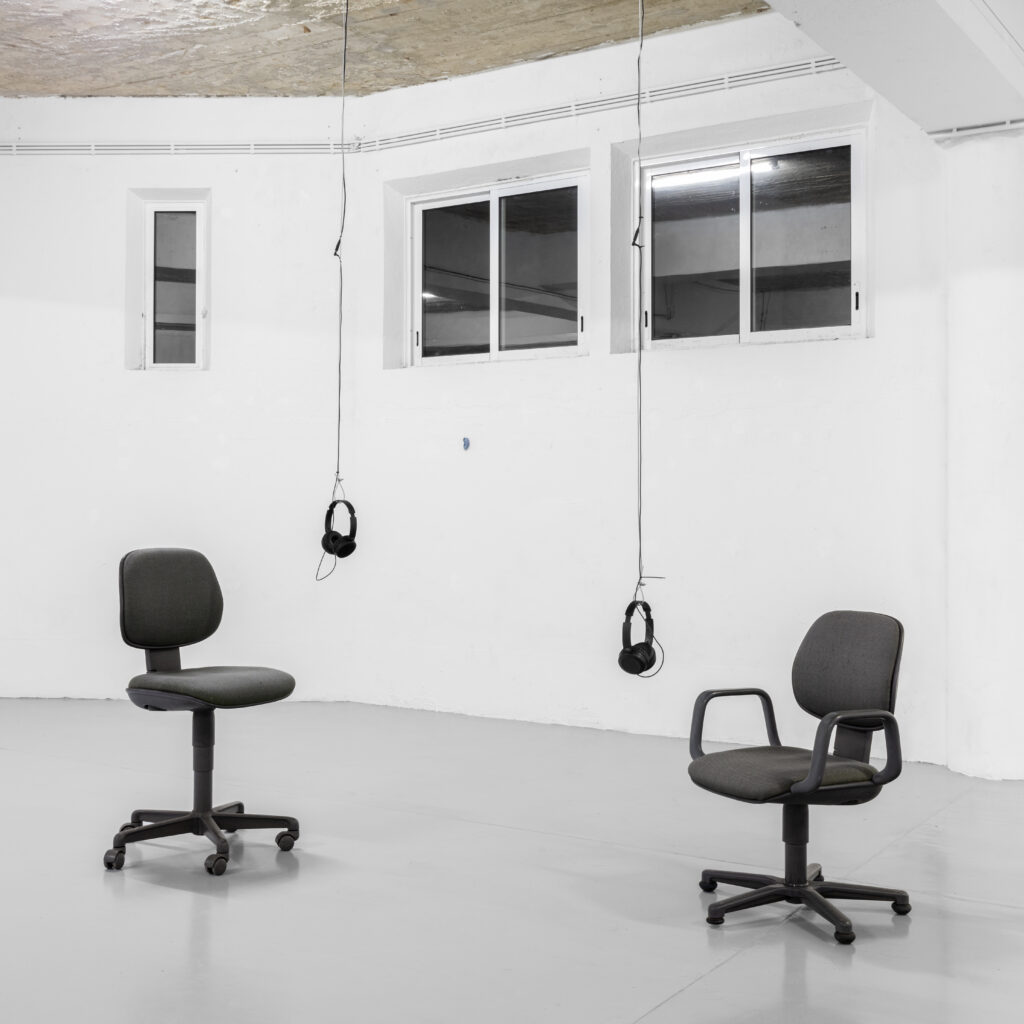
For the present exhibition, artist Yota Ayaan asked a clairaudient medium to listen to the ‘unseen,’ speaking to a future artwork. Reading (2024) is based on the resulting transcript, transmitted through headphones that hang down from above. A poem of sorts. [The sound work features voices of Šalnė Bučiūtė, Francisca Sousa Soares and João Jantarada and was produced in collaboration with Francisco Pedro Oliveira.]
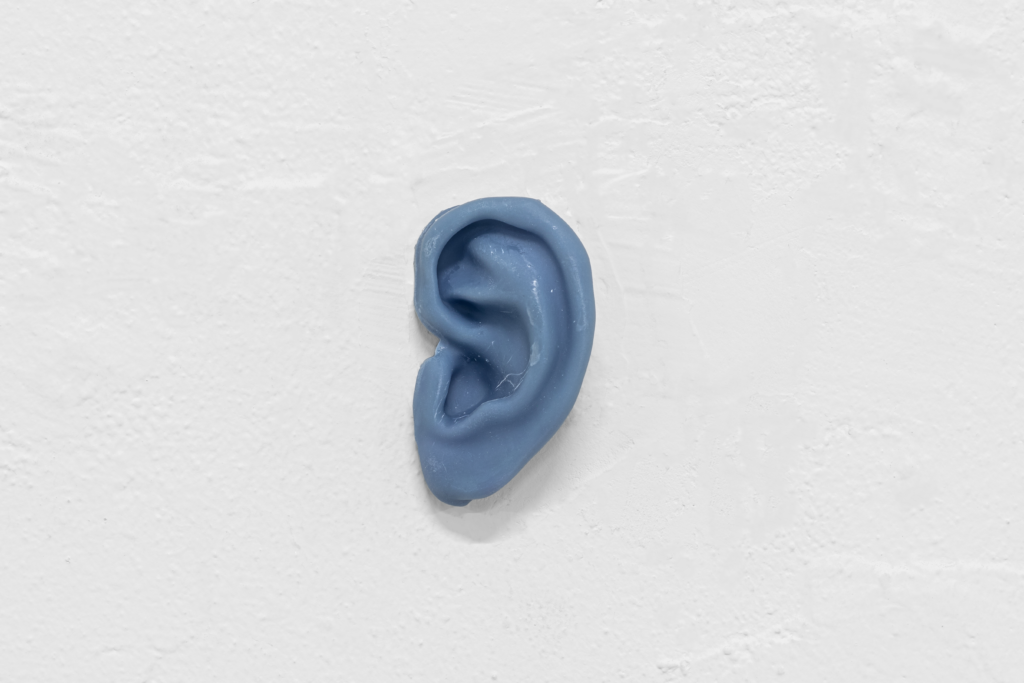
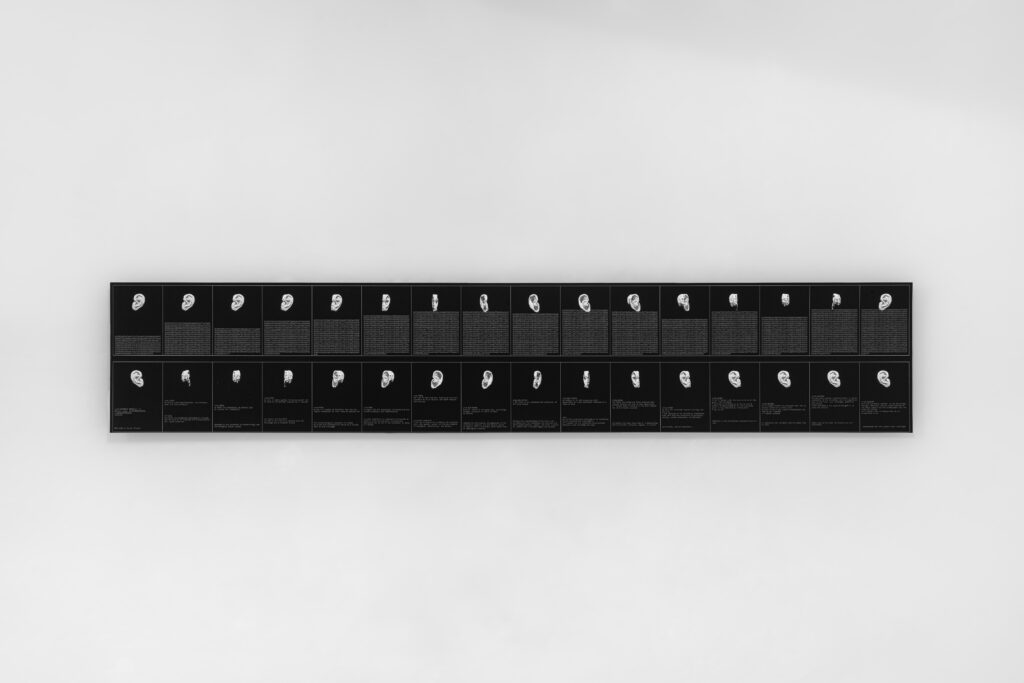
The Manifesto Terricola (2023) by Solimán López is an artistic document, which presents information on the current situation of humanity. The document assumes a particular materiality, being stored in DNA and encapsulated in biodegradable 3D ear produced for preservation in the Svalbard Island in the Arctic.
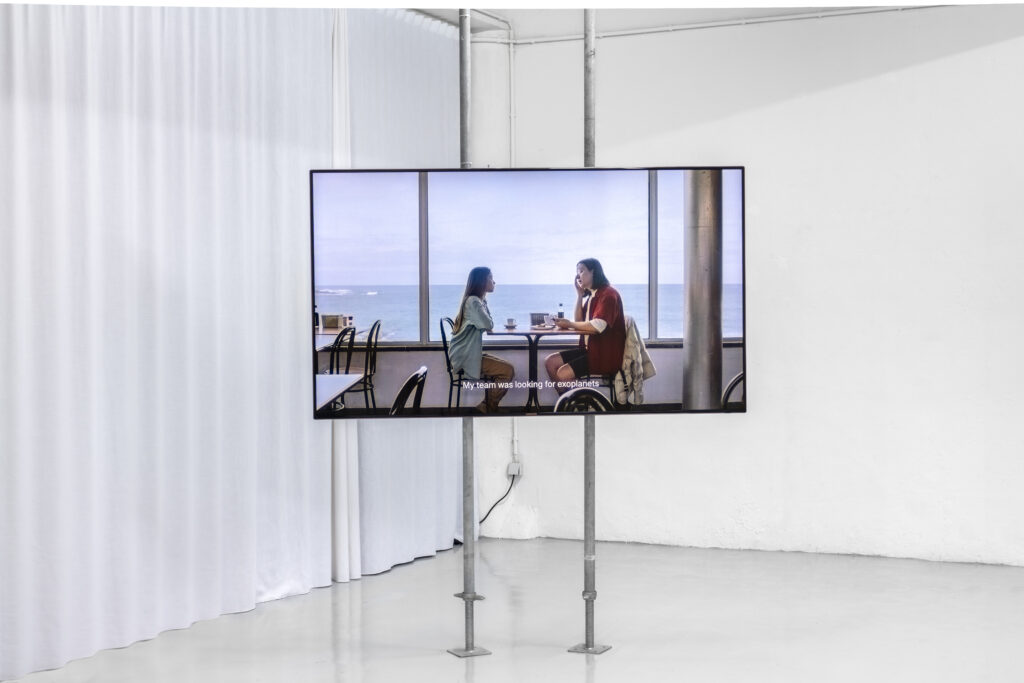
The film See You Later Space Island (2022) by Alice dos Reis is a narrative-ish work of science fiction that tells the story of a friendship. Set on the Azorean island of Santa Maria, an astrophysicist’s space investigation brings the vast distance of exoplanets into seeming proximity to the island’s geology.
Stó꞉lō/Xwélmexw artist, curator and writer Dylan Robinson describes certain indigenous listening practices that are about feeling at least as much as about hearing. He makes reference to “the importance of listening with ‘three ears: two on the sides of our head and the one that is in our heart’” – a hearing-feeling. If listening is not only hearing but also feeling, then our deafness to many others is not only a question of hearing capacity and frequency ranges but also one of feeling capacity, of attention, attitude and sensitivity.
To speak is to affirm one’s subjecthood and sovereignty. To listen is to allow and desire the other’s existence and expression. What have we failed to hear, and what can we perceive when we expand the capacity of our hearing-feeling, our sensitivity towards others and aliens of different kinds?
Photos: Samuel Duarte