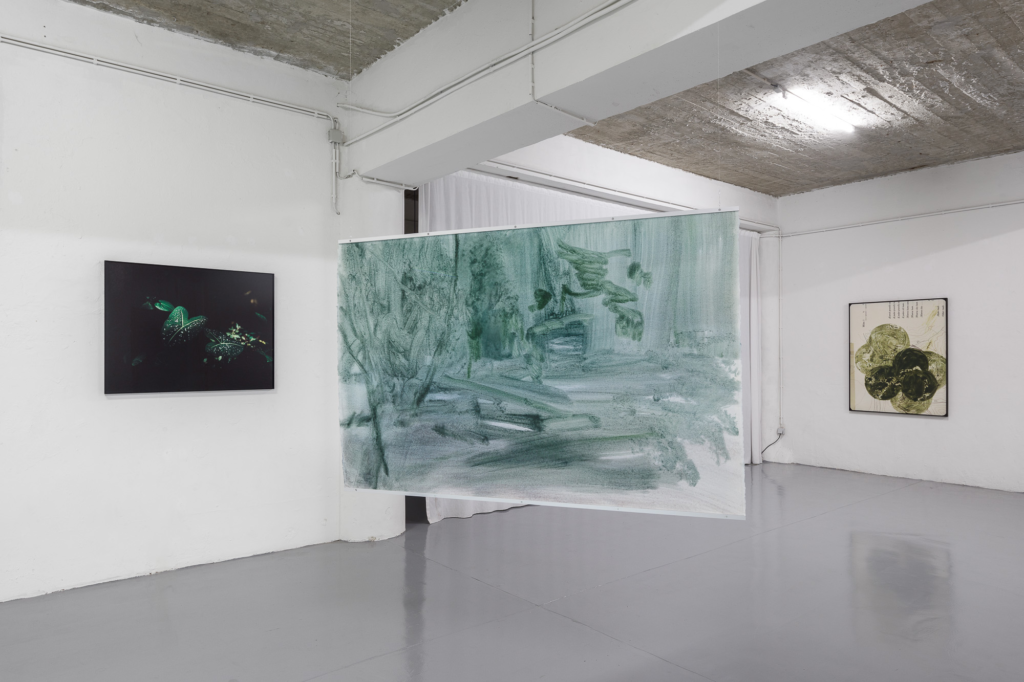
Exhibition featuring works by Anne Büscher, Marco Pires, Sanne Vaassen, Pedro Vaz, Márcio Vilela, Joana Viveiros
mono, Lisbon, 2024
When we ask if plants are conscious or sentient, we essentially ask whether, or to what extent, they are like us: we search for ourselves in them. But could we instead encounter them “on their own turf,” as philosopher Michael Marder suggests – without invading their space? In his book Plant-Thinking: A Philosophy of Vegetal Life (2013), plant-thinking is understood as:
“(1) the non-cognitive, non-ideational, and non-imagistic mode of thinking proper to plants (hence, […] ‘thinking without the head’); (2) our thinking about plants; (3) how human thinking is, to some extent, de-humanized and rendered plant-like, altered by its encounter with the vegetal world; and finally, (4) the ongoing symbiotic relation between this transfigured thinking and the existence of plants.”
Such plant-thinking contrasts with the kind of anthropocentric thinking that views the plant-other through the lens of human constructs and questions of utility, where appreciation is a function of serviceability for human use or recreation; and where this very appreciation tends to engender the vegetal other’s appropriation, colonisation and destruction.
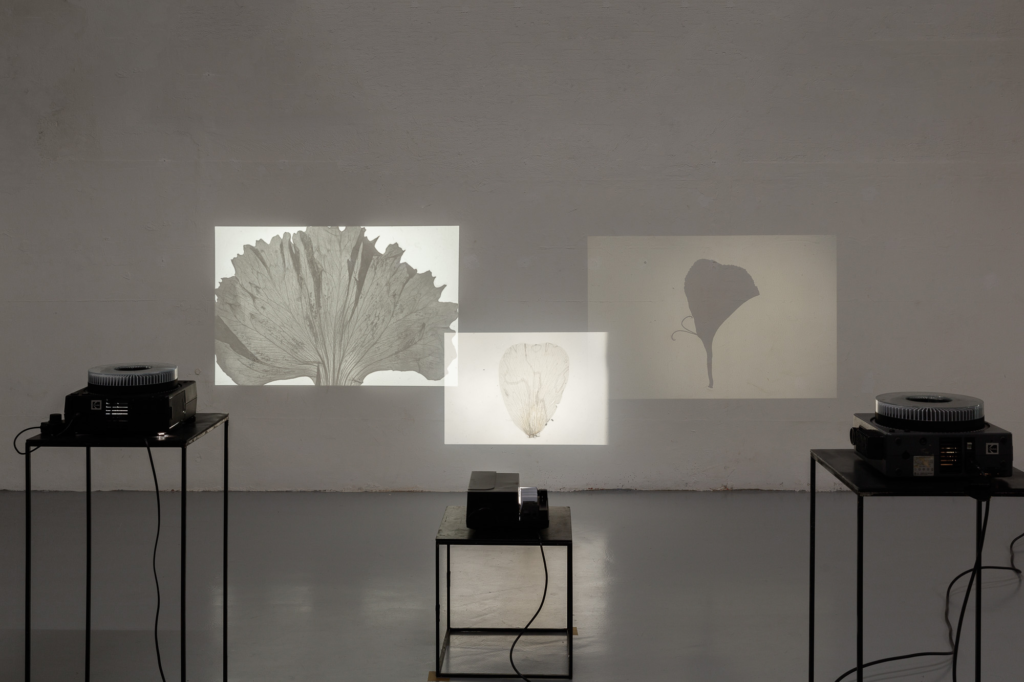
The delicate aesthetics of Sanne Vaassen’s work both hide and reveal layers of complexity, pointing to the non-neutrality of the plant world. X (2021) shows seemingly innocent images of flowers that have been subject to colonialism, cultural appropriation, climate change and landscape management for centuries. Far from neutral, images of flowers carry symbolism and cultural-political significance.
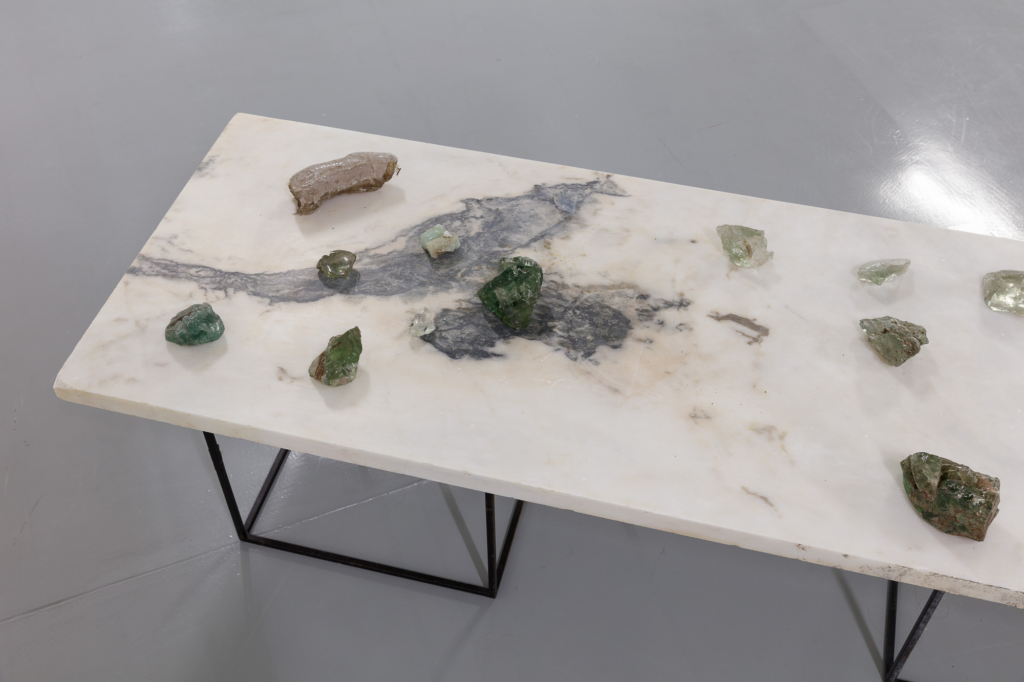
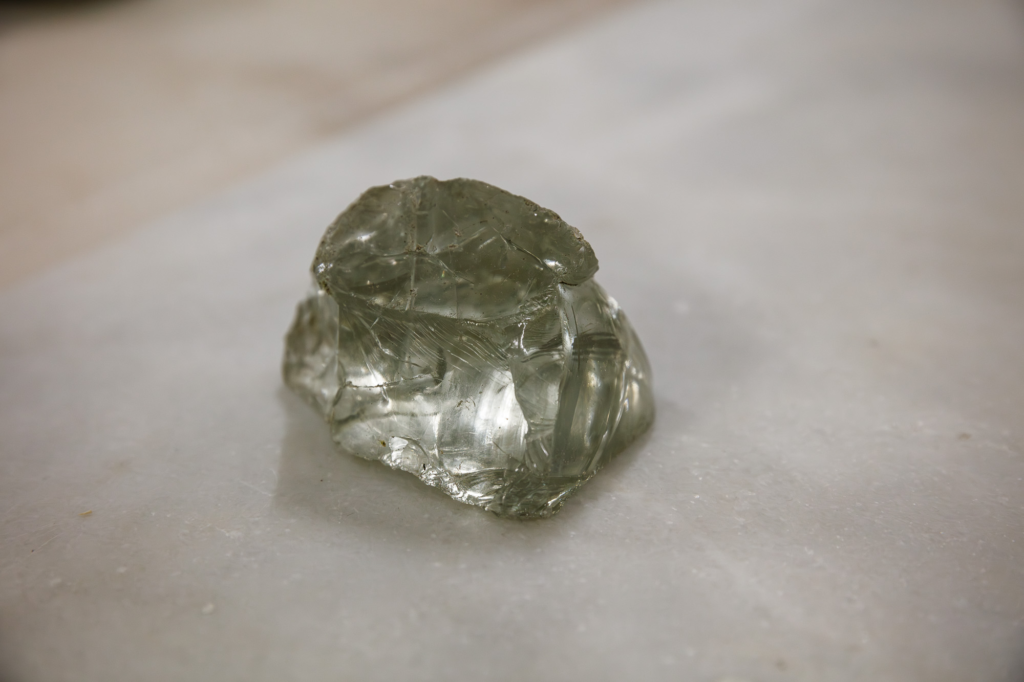
Anne Büscher’s Forest Glass (2022) is a collection of glass pieces that the artist found in a Swedish forest around a former glass factory. Thrown into the forest until the 1960s with the intention to let them become part of nature again, these pieces can be found like pretty stones or crystals and are admired for their beauty. Yet they release poisonous substances into the ground and bear stories of industrial pollution.
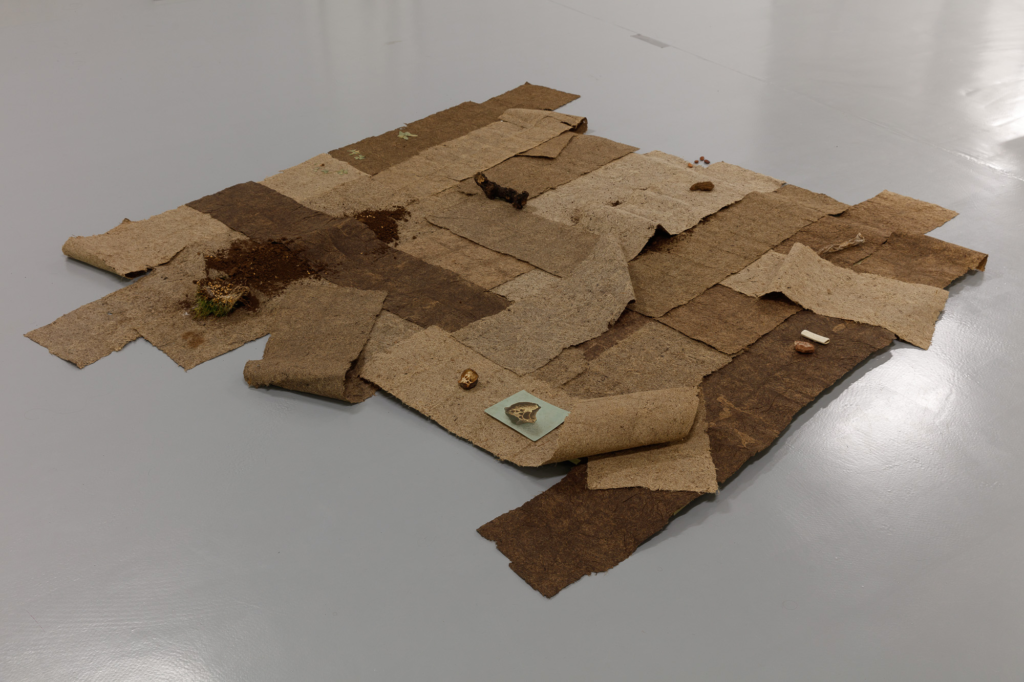
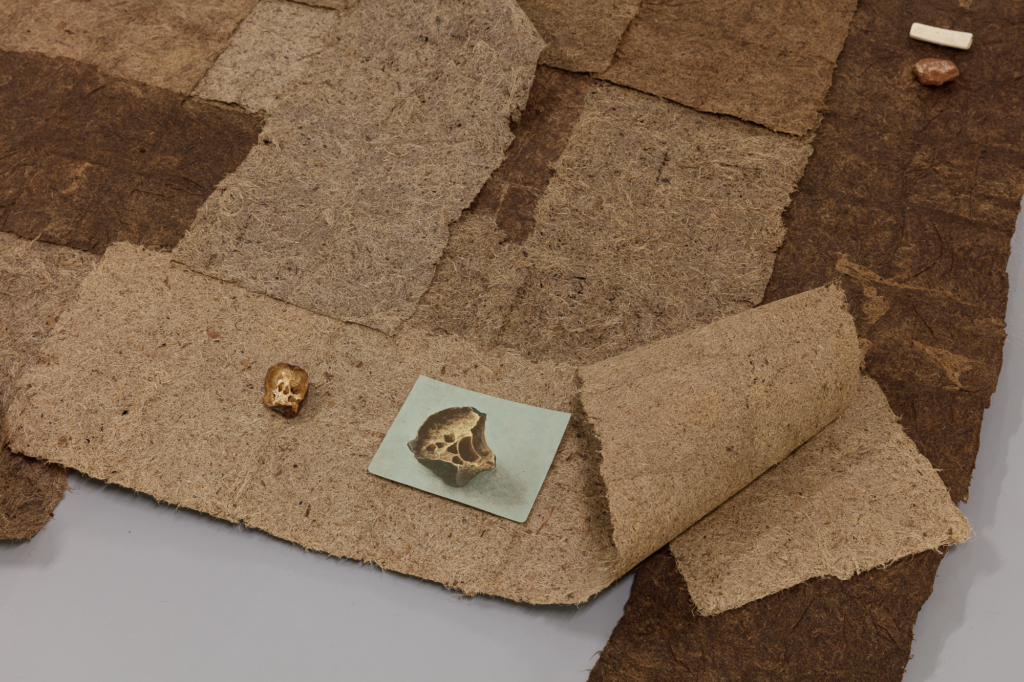
What happens when humans and plants enter a relationship of mutual transformation and care? Exploring the intimate connection her father has with his garden, Joana Viveiros draws attention to the real, tactile, felt dimension of a relationship defined by the acts of planting, nurturing and harvesting. The gardener transforms the garden, and as the fruits are eaten, they nourish the gardener (and his family), transforming him from the inside out. In Feeding Ground (2024), banana leaves are transformed into paper, the colour and texture of which resembles the soil to which it will eventually return.
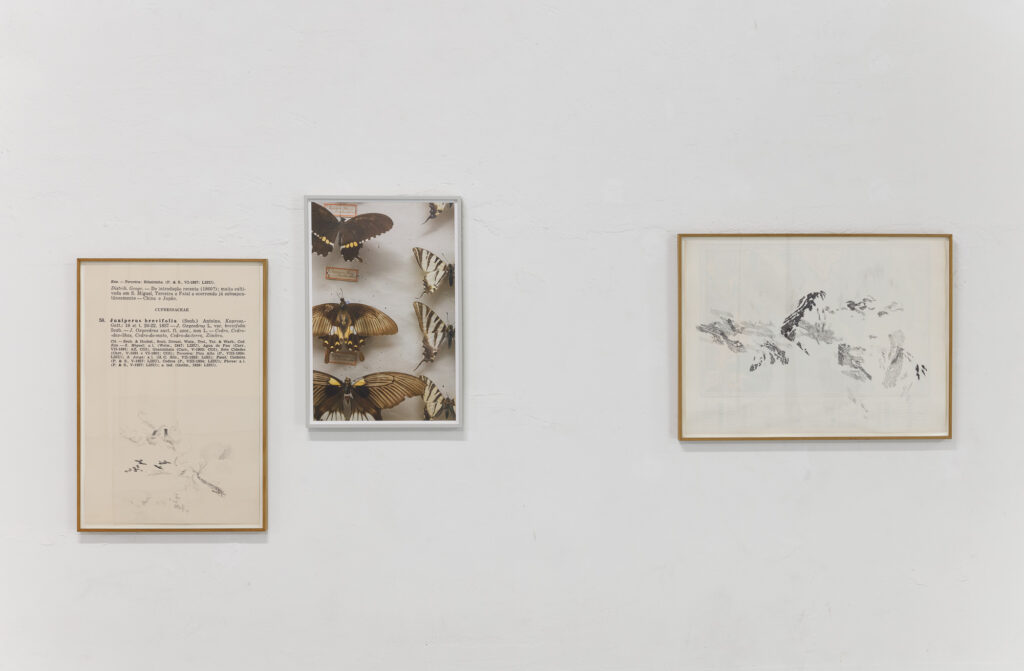
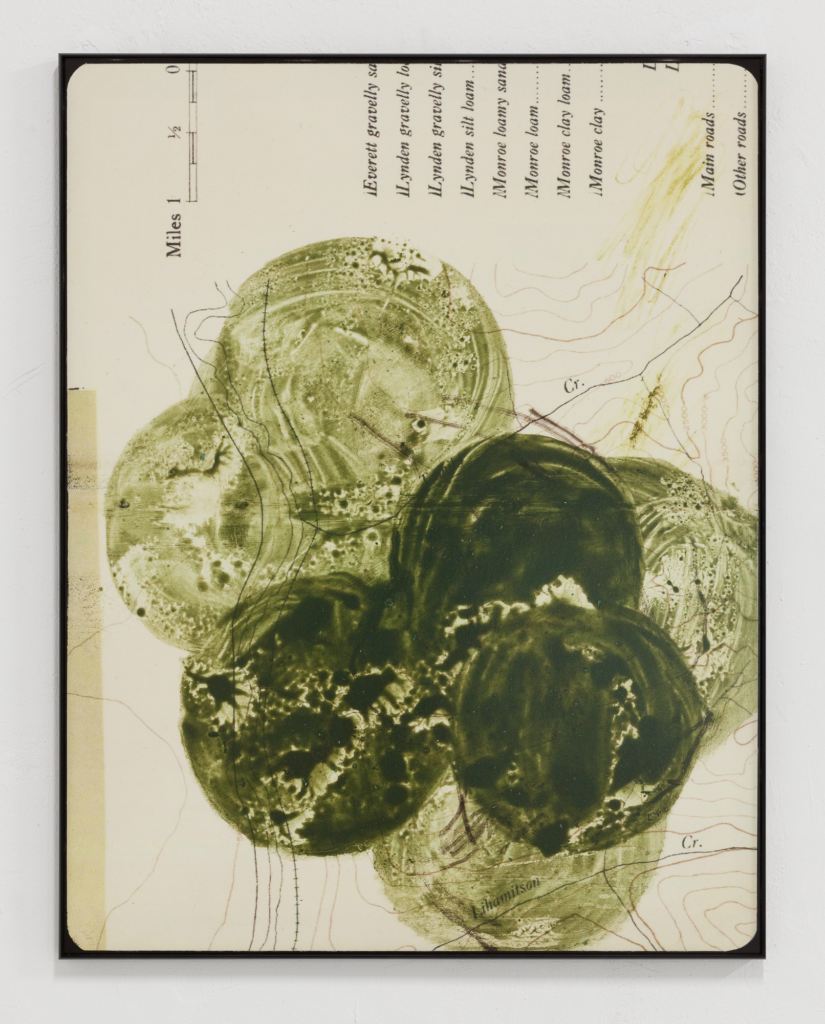
The documents that give form to Marco Pires’ engage- ment with landscape are not direct representations of natural spaces. The map is an abstraction and so is the scientific definition of a species; they are tools to grasp (mentally and concretely) the landscapes and beings they describe. But can we know a landscape through its mapping? Can we know a plant through its scientific description? Or do such representations tell us more about ourselves than about the other? The way Marco treats these representations, overdrawing and over- painting them, reveals them as the anthropocentric fictions that they are.
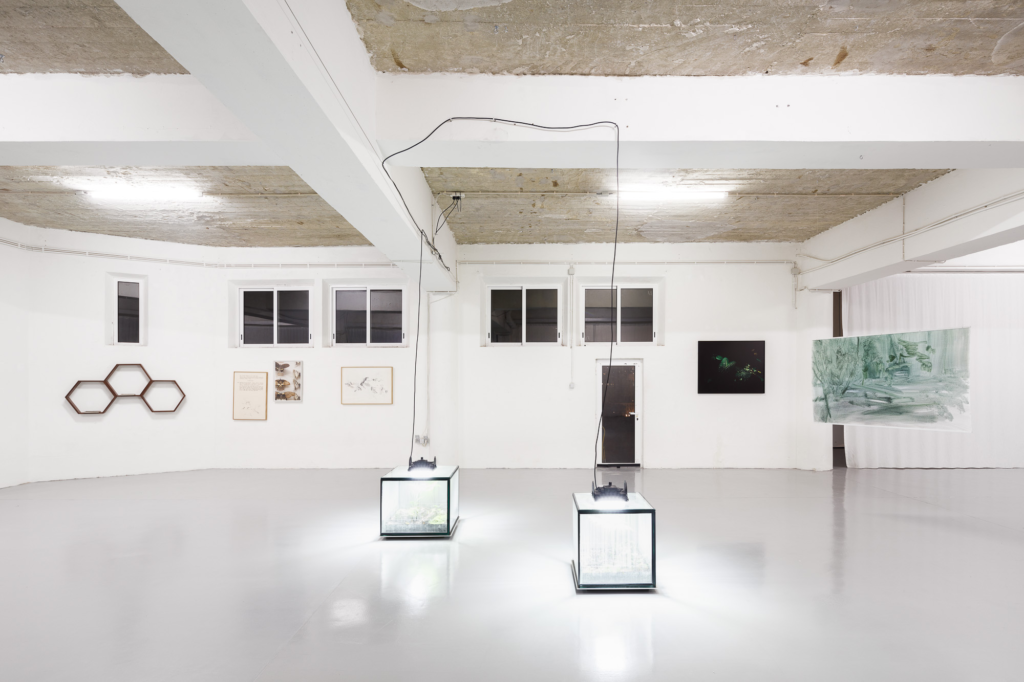
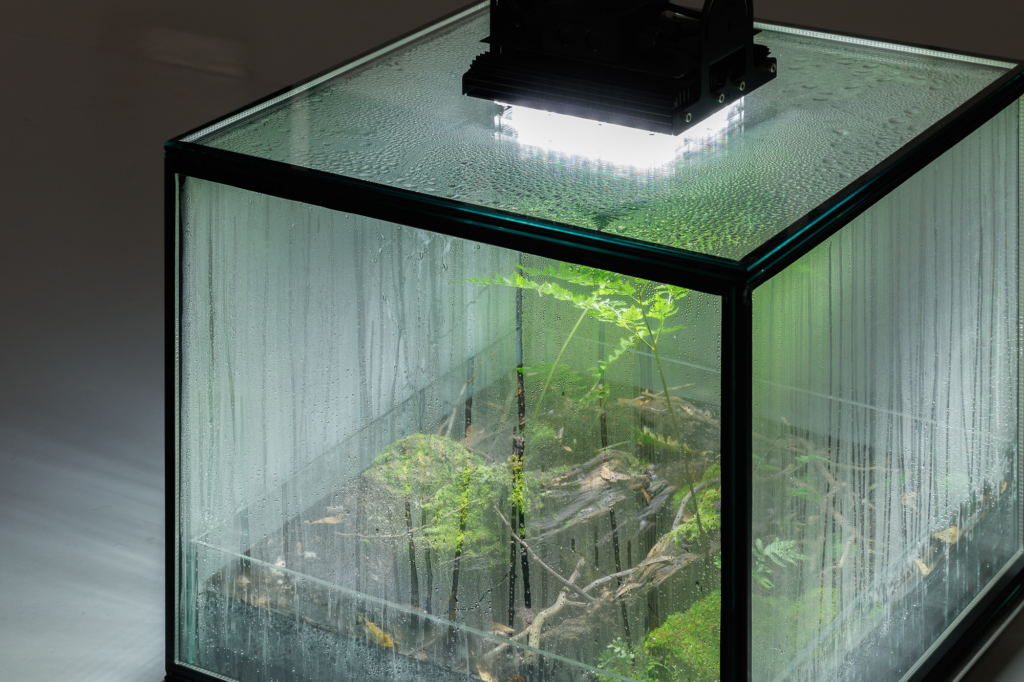
The perhaps illusory attempt at comprehending nature (from Latin comprehendere, “to grasp”, from the prefix com- and prehendere, “to seize”) is returned to us in Pedro Vaz’s Contained Nature (2021). This artificial ecosystem is composed and confined for the purpose of observation. As the observation draws us in, we realise not only that the object is alive and sentient, but also that, by seizing nature and containing it behind these glass walls, we create a separation between the non-human and ourselves – that by trying to comprehend, we won’t encounter, won’t know it; we will miss it.
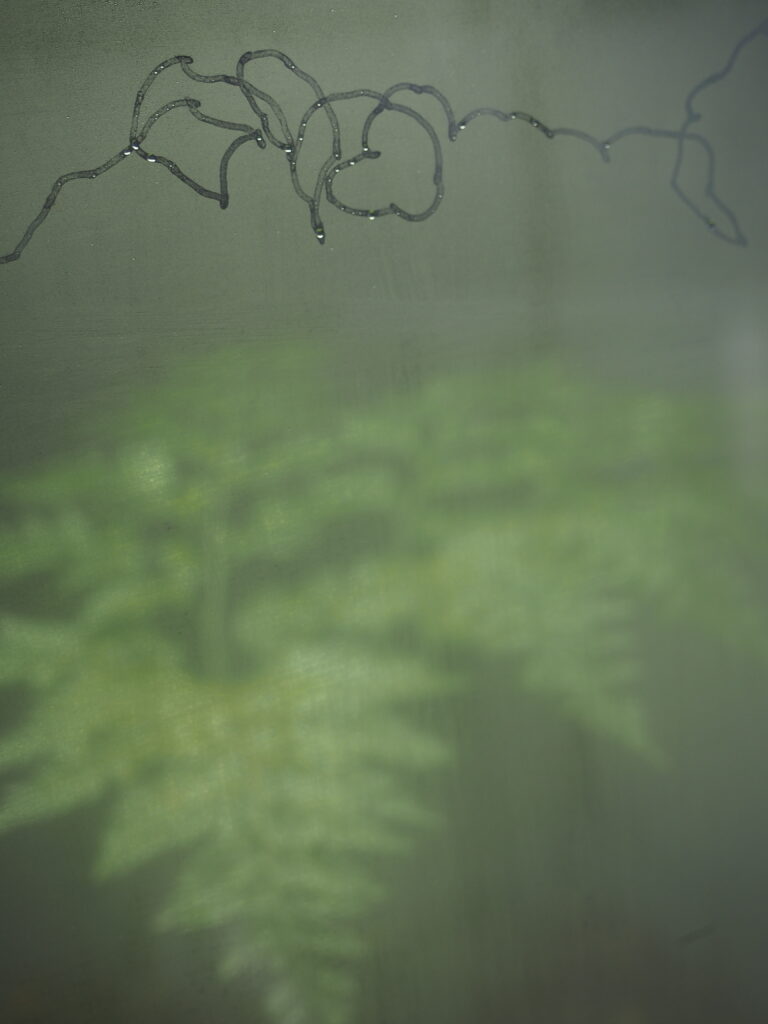
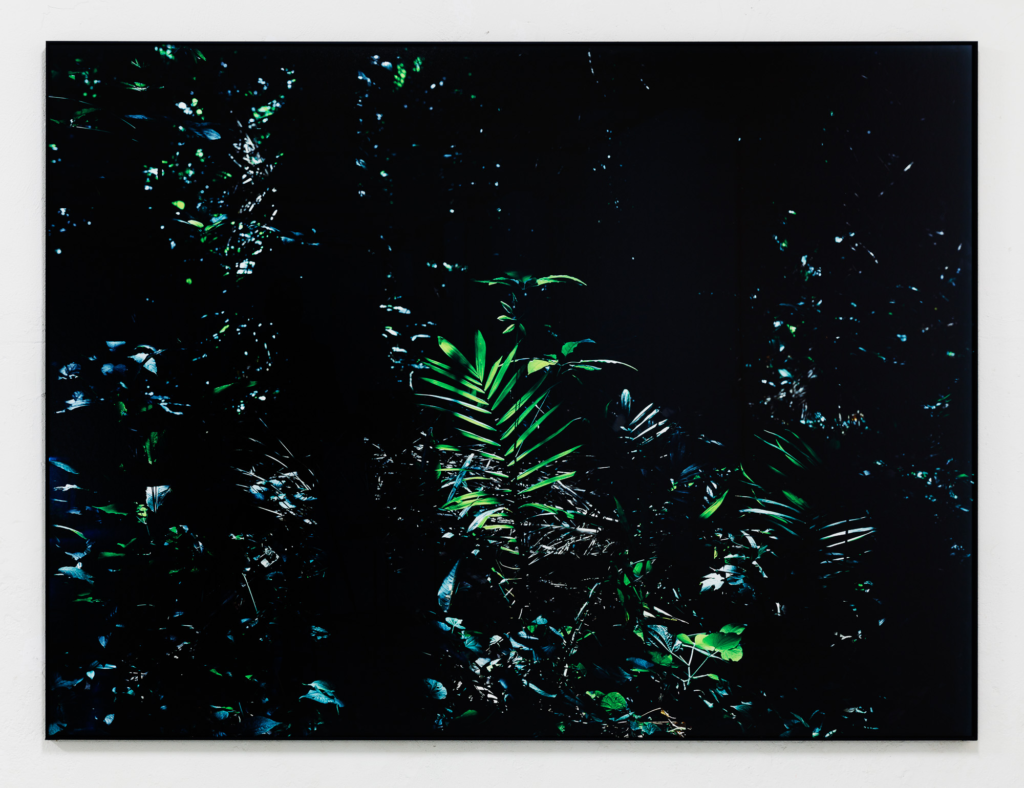
Márcio Vilela’s Superflora is the result of the artist’s immersion in the forest surrounding Recife between December 2020 and April 2021. The work speaks of the artist’s encounters while walking through the woods, the niches that ‘appear’ and ‘disappear’ according to the light that penetrates the treetops. The plants reveal themselves to the artist and give permission to be photographed, thus becoming subjects.
Photos: photodocumenta